Invisible Violence: Why Mothers Must Be Recognised in the Fight Against Gender-Based Abuse
25.03.26
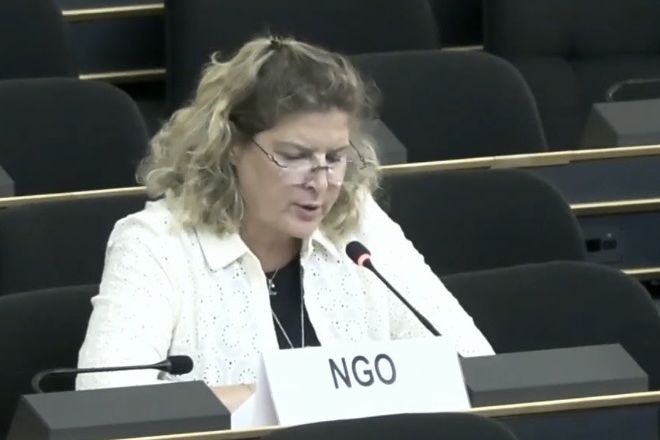
UN Geneva – Violence against women is widely acknowledged. Yet the specific forms of violence linked to motherhood remain largely overlooked. Drawing on grassroots evidence from across the globe, Make Mothers Matter (MMM) has responded to a call for input from the UN Special Rapporteur on Violence against women, highlighting the distinct and systemic forms of abuse faced by mothers – and calling for urgent recognition and action.
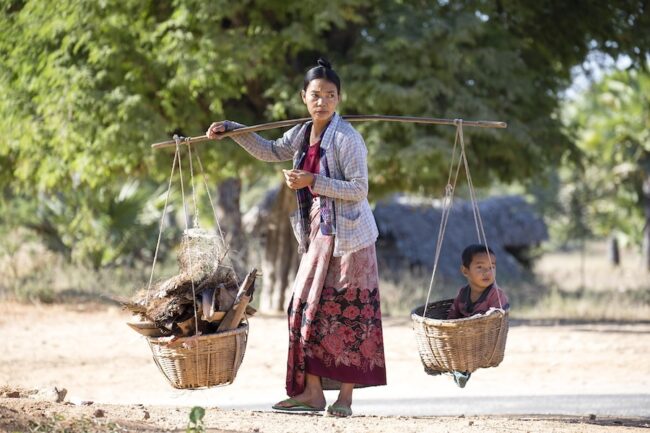
This article summarises MMM’s submission, which is based on contributions from eight of our grassroots member organisations: Associations des Familles Monoparentales (ADFM, France), AMECEF (Haiti), Mulheres à Obra (Portugal), Mom Got a Job Foundation (Bulgaria), Mouvement OTITSARA (Madagascar), Life for African Mothers (Sierra Leone), Mothers for Peace (Afghanistan), and Maternity and Midwife Support (MMS, Democratic Republic of Congo).
Motherhood, a hidden dimension of gender-based violence
While violence against women is globally recognised as a human rights violation, the specific violence women experience because they are mothers remains largely invisible in law, policy, and data. MMM’s submission argues that motherhood often intensifies women’s exposure to multiple, intersecting forms of harm—economic, institutional, social, physical, and psychological. These forms of violence are rooted in entrenched gender inequality and reinforced by social norms that idealise maternal sacrifice.
Evidence from our grassroots member organisations across Europe, Africa, Asia, and the Caribbean shows that women who are mothers face structural discrimination that limits their autonomy and increases their vulnerability.
Economic and institutional barriers trapping mothers
Economic violence is particularly pervasive: the unequal distribution of unpaid care work restricts mothers’ access to decent employment, often leading to financial dependence and exclusion from social protection systems. Discriminatory hiring practices, a persistent motherhood wage gap, and a lack of flexible work arrangements further entrench inequality. In addition, gaps in child maintenance enforcement and social security systems leave many – especially single mothers – in precarious economic situations.
Institutional and legal systems frequently fail to protect mothers – and can even exacerbate their vulnerability. Family courts may prioritise formal co-parenting arrangements over safety, including in cases involving domestic violence. Welfare systems often penalise single-parent households, while administrative barriers and discriminatory practices restrict access to justice, housing, and public services. These failures reflect deep-rooted biases embedded in legal and policy frameworks.
Violence in private and public spheres
Mothers also face heightened exposure to interpersonal violence. Intimate partner violence often begins or escalates during pregnancy and the postpartum period, with serious consequences for both maternal and child health.
In healthcare settings, obstetric and reproductive violence—including neglect, coercion, and abuse—violates women’s dignity and right to health. Preventable maternal mortality and untreated maternal mental health conditions further illustrate how systemic neglect can amount to forms of violence.
Intergenerational impacts on children
The consequences extend beyond mothers themselves. Hundreds of millions of children live in households where their mothers experience violence, leading to long-term psychological, behavioural, and social impacts. These dynamics contribute to the perpetuation of intergenerational cycles of violence and inequality.
Unequal risks and extreme situations
Certain groups of mothers face compounded and intersecting risks, including single mothers, adolescent mothers, mothers with disabilities, and migrant or refugee mothers. Stigma, poverty, and legal precarity further intensify their exposure to abuse and exclusion. In extreme contexts – such as Afghanistan – mothers face near-total erasure of their rights, with severe restrictions on mobility, healthcare, and personal autonomy.
A call for recognition and action
Despite strong international legal frameworks, including obligations under CEDAW and the Convention on the Rights of the Child, significant implementation gaps remain.
MMM calls for explicit recognition of violence against mothers as a distinct form of gender-based violence. We urge governments to:
– improve data collection
– reform social protection and family justice systems
– ensure respectful maternity care
– and invest in targeted, context-sensitive support services
Protecting mothers is essential – not only for gender equality, but also for the safeguarding the wellbeing of children and societies as a whole.

Further engagement
The UN Special rapporteur also conducted an online consultation, in which MMM participated. As the discussion focused on recommendations and good practices, MMM called for addressing the unequal distribution of unpaid care work and promoting greater involvement of fathers in caregiving as part of the solution.
MMM look forward to the forthcoming report of the Special Rapporteur, which will be the first UN report to focus specifically on motherhood as a factor of vulnerability.
 Share
Share Share
Share Print
Print Email
Email
Maternal Psychological Wellbeing: A Challenge and a Unique Opportunity
13.01.26
Wednesday 28 January 2026 | 15:15 – 17:30 GMT London School of Economics & Political Science (LSE) – Live broadcast #MaternalWellbeingLSE Maternal mental health is one of the most pressing

Climate Change: A Maternal Physical and Mental Health Emergency
13.11.25
In the lead-up to the UN climate change conference in Belem, Brazil (COP30), MMM was delighted to collaborate with Dr. Saravanan Thangarajan, a Visiting Scientist & Faculty member at Harvard
Democracy on Hold: The Hidden Penalty for Parliamentarians Who Become Mothers
27.11.25
The European Parliament adopted a legislative resolution on the amendment of the European Electoral act, allowing Members to vote in plenary by proxy voting during pregnancy and after giving birth.