Mothers’ Voices at the Heart of Europe
29.09.25
A Look Back at Our State of Motherhood Survey Presentation at the EU Parliament
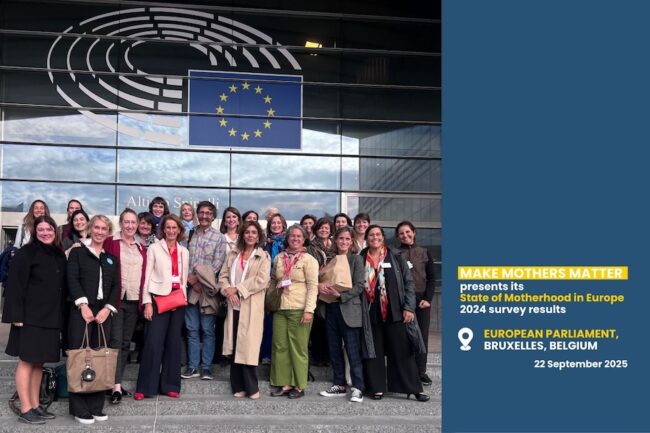
On 22 September 2025, Make Mothers Matter (MMM) brought mothers’ lived realities directly to the European Parliament with the presentation of our State of Motherhood Survey Report. It was a vital step in bringing mothers’ voices into a place where decisions are made and concrete, meaningful change can happen.
The report, built from the voices of mothers across Europe, underlines what so many families already know: motherhood is central to society, yet too often overlooked in policymaking. The event made clear that supporting mothers means supporting children, families, and the future of Europe itself.
A Hybrid Event Bringing Together Partners and Supporters
The event was held in a hybrid format, enabling MMM to engage a diverse audience, including policymakers, experts, the private sector, and civil society leaders as well as MMM members. The gathering underscored the collective commitment to addressing the challenges faced by mothers and families across Europe.
MMM’s head of EU Delegation Johanna Schima opened proceedings by thanking MEP Maria Noichl (S&D) for hosting the event.
Johanna noted that “nearly 10,000 mothers across Europe and the UK had shared their struggles, resilience and hopes, and that behind each number is a mother fighting for her child, a child needing stability and a family at risk. Their message is clear: too much is failing, and change is urgent”.
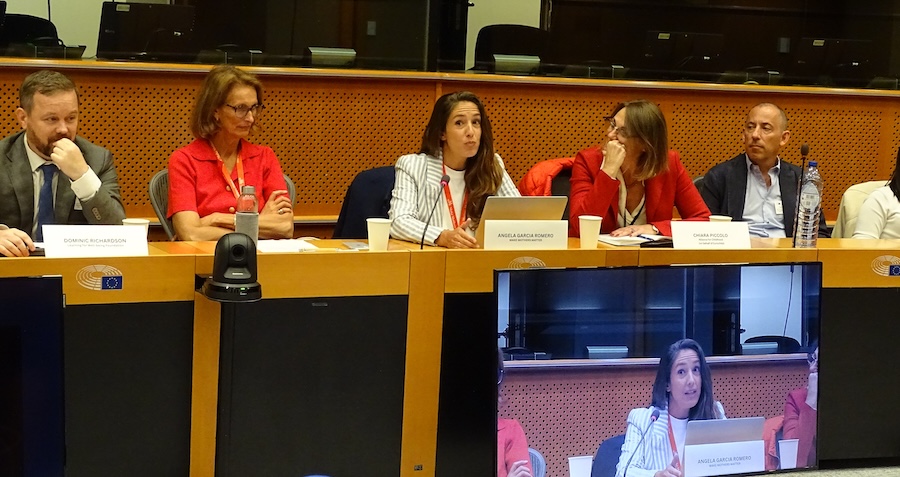
MMM’s Project Director Angela Garcia Romero provided an update on the Europe-wide findings.
She told the audience: “We initiated this survey, in partnership with global research company KANTAR, to ask questions that had never been asked before, to listen to mothers talk for themselves, and create solid ground data for policymakers – so they truly understand what is going on”.
Panel Discussion 1: Juggling Care and Career
The first panel moderated by Julie Foubert, Ethical Leadership Consultant and Founder of Be The Change, delved into the complexities of balancing caregiving responsibilities with professional aspirations. Speakers highlighted how policies still lag behind the realities of the lives of mothers.
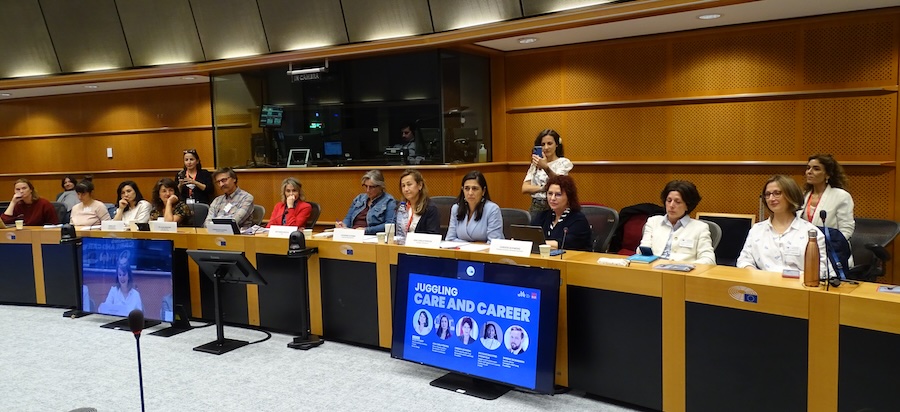
- Dominic Richardson, Executive Director at the Learning for Well-being Foundation, stressed the urgent need to rethink frameworks that currently act as a “disincentive for men to share the responsibility of care work.”
- Christa Schweng, Vice President Equality Group, European Economic and Social Committee (EESC), echoed this, noting that “taxation, parental leave and paternity leave policies should be designed so that fathers are encouraged to take leave”.
- Ana Carla Pereira, Director for Equality and Non-Discrimination, DG JUST, European Commission, highlighted the wider societal cost of unpaid care work, reminding participants that “someone is holding this cost, and it is women.”
- Sylviane Balustre-d’Erneville, Engagement and Social Innovation Director and Engage and Care Corporate Coalition Founder L’Oréal, reminded participants of a deeper truth: “When we are in a company, we are citizens first.” Recognising care is not only an issue of family balance but one of citizenship and equality.
Panel Discussion 2: Navigating Maternal Mental Health
Maternal mental health emerged as a central theme not just in our survey but throughout the two hour discussion.
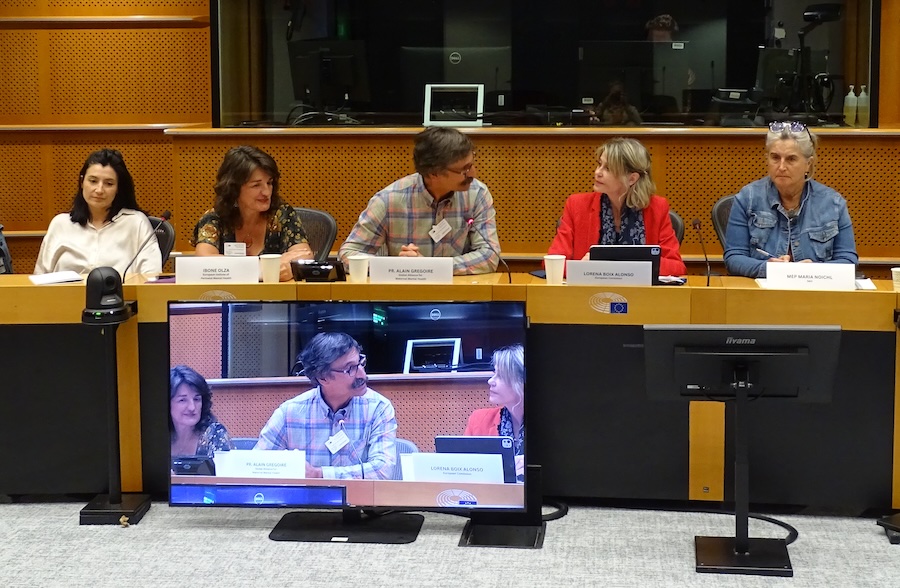
- Alain Gregoire, Chair, The Global Alliance for Maternal Mental Health (GAMMH), who steered the discussion, powerfully stated that “what we all are now is influenced by our experience when we were babies,” underlining that maternal wellbeing shapes children’s development. And yet, as he warned, “we have a lot of knowledge on these topics, but we do nothing about it.”
- MEP Maria Walsh (EPP), in her pre-recorded video message, put it simply and passionately: “If mental health is truly a right for all, then maternal mental health must be part of the conversation.”
- Chiara Piccolo, European Partnerships and Advocacy Lead (L4WB) and Managing Director Alliance for Childhood (on behalf of Eurochild), added that “maternal mental health is a children’s rights issue – because without it, children’s development and care are undermined.” She reminded us: “If we want children to thrive, we must support mothers.”
- Ibone Olza, Child and perinatal psychiatrist & cofounder, European Institute of Perinatal Mental Health, offered a vision of what that support could mean: “From pregnancy on, mothers need to be supported, listened to, cared for, and celebrated. Imagine a society where infants and children are welcomed, and their mothers and fathers supported. Where mothers can truly enjoy the gift of giving life and be valued for it.”
Building on European Momentum
There was also recognition of the progress already being made at the EU level.
- Lorena Boix Alonso, Deputy Director-General, DG SANTE, European Commission, highlighted recent initiatives such as the Comprehensive Approach to Mental Health adopted in 2023, as well as the approval of the first medication to treat postpartum depression. She also emphasized the importance of the Work-Life Balance Directive, which supports member states in rethinking family and workplace policies.
- Ana Carla Pereira reiterated the EU’s commitment to integrating gender equality into all policies and ensuring that mothers’ voices are heard in decision-making.
MMM’s Requests for Systemic Change
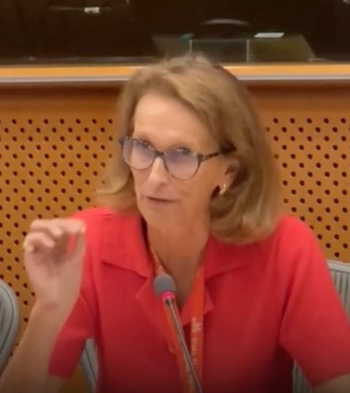 In her closing remarks, Anne-Claire de Liedekerke, President of Make Mothers Matter, spoke directly to EU policymakers and institutions with clear, actionable recommendations:
- Parental leave: Encourage member states to ensure leave is adequately remunerated so it is not disproportionately shouldered by mothers.
- Flexible work: Elevate the Right to request flexible working into a true right of access.
- Maternal mental health: Explicitly embed maternal mental health into the Child Guarantee national action plans and propose a Council Recommendation on Perinatal Mental Health.
- Integration into health systems: Implement the 2022 WHO guide on perinatal mental health across Europe.
- Recognition of care work: Drive cultural and political change to value unpaid care as essential work that sustains society.
“These changes are needed now,” Anne-Claire urged. “The challenges mothers face today should not be theirs alone: they demand a collective response – from policymakers, employers, workplaces, and all of us.”
Watch the full recording here
 Share
Share Share
Share Print
Print Email
Email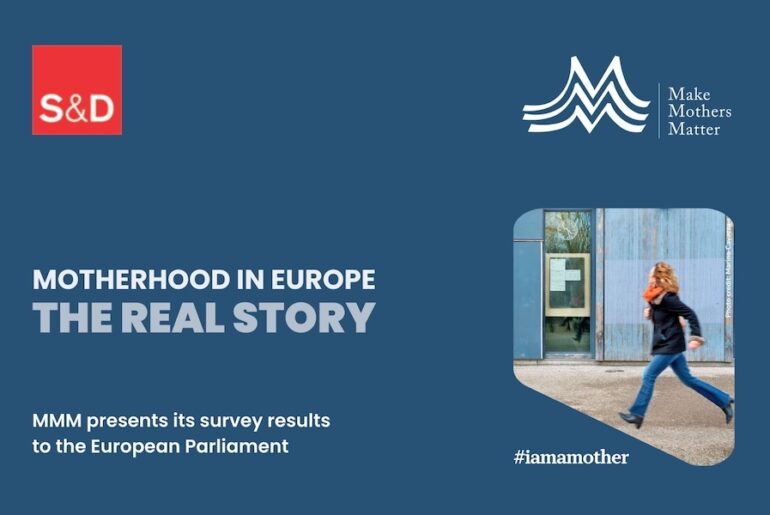
Europe Must Listen to Mothers: Our landmark report heads to the European Parliament
28.08.25
On 22 September 2025, the voices of mothers will take centre stage in Brussels. For the first time, Make Mothers Matter (MMM) will present its State of Motherhood in Europe
Belgian Mothers Face Alarming Rates of Burnout and Perinatal Depression, New EU Survey Finds
03.07.25
Belgian mothers are facing a mental health crisis. According to the State of Motherhood in Europe 2024 survey by Make Mothers Matter (MMM) and Kantar, Belgium reports the highest rates
Maternal Psychological Wellbeing: A Challenge and a Unique Opportunity
13.01.26
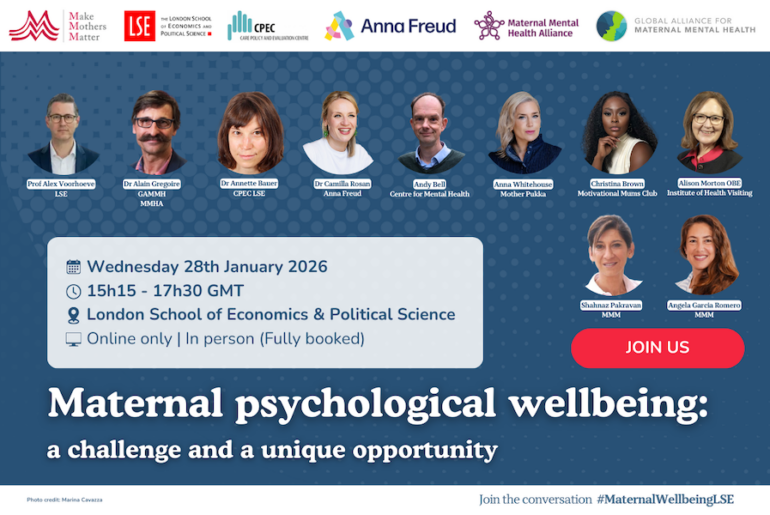
Wednesday 28 January 2026 | 15:15 – 17:30 GMT London School of Economics & Political Science (LSE) – Live broadcast #MaternalWellbeingLSE Maternal mental health is one of the most pressing