Rethinking Development: Care and Social Protection at the Core
17.10.25
Join us on Monday 3rd November for our online solution session to the Second World Summit for Social Development on Shifting the paradigm: centring care society and social protection for social development
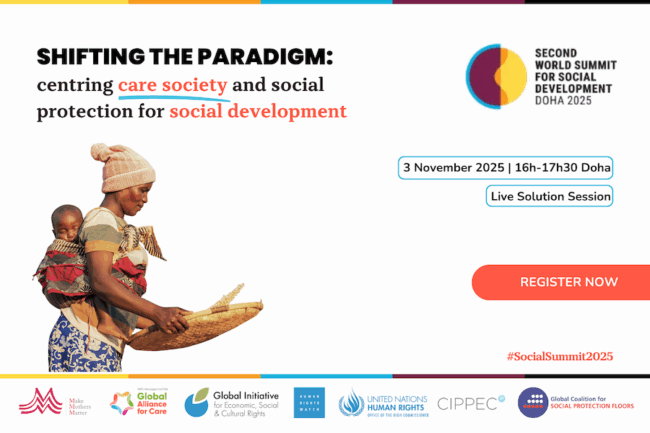
📆 Monday 3 November
⏰ 16:00-17:30 Doha / 14:00-15:30 Paris / 8:00-9:30 New York
📍 Online
👉 Register here
Programme

Moderator:
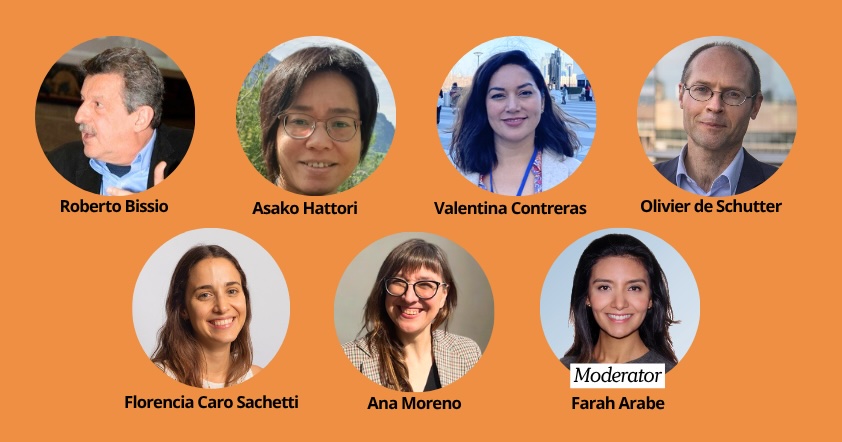
- Farah Arabe, Main representative to the UN in New York, Make Mothers Matter (Moderator)
Introductory Remarks:
- Roberto Bissio, Member, Global Coalition for Social Protection Floors (GCSPF)
Panel
- Asako Hattori, Human Rights Officer, Women’s Human Rights and Gender Section, UN Office of the High Commissioner for Human Rights (OHCHR)
- Valentina Contreras Orrego, Programme Officer on Public Services and Care, Global Initiative for Economic, Social and Cultural Rights (GI-ESCR)
- Olivier de Schutter, UN Special Rapporteur on Extreme Poverty and Human Rights
- Florencia Caro Sachetti, Associate Researcher Social Protection Program, Centro de Implementación de Políticas Públicas para la Equidad y el Crecimiento, Argentina (CIPPEC)
Q&A
Concluding remarks
- Ana Moreno, Technical Secretary, Global Alliance for Care (TBC)
Background
Although the 1995 Copenhagen Declaration adopted at the first World Summit on Social Development emphasised placing people at the center of development and recognised women and families as key agents of social progress, it did not fully acknowledge the central and crucial role of care in social development.
Care and support work—both paid and unpaid—is foundational to human wellbeing and social development. Yet it remains undervalued, invisible in economic planning, and unequally distributed, particularly across genders and between families, communities, the private sector and states. Recognising, supporting and redistributing care and support work is essential for building inclusive, equitable, and sustainable societies, which is the very objective of social development.
Care and support work contributes significant economic value globally and underpins both the productive and reproductive functions of society. Yet this contribution remains inadequately reflected in national statistics and public policies. Improving women and girls’ lives demands a shift in how we measure productivity–including finding models that go beyond GDP–and in the ways in which we redistribute the costs and benefits of sustaining life on the planet.
Taking social development seriously requires states and communities to strengthen human rights-based universal, quality public care systems: those that guarantee the rights of all people𑁋including those providing and requiring care and support𑁋, redistribute responsibilities among all, and strengthen social cohesion. Public care and support services are instrumental in ensuring women’s rights, gender-, age- and disability-justice, and leaving no one behind, but more importantly, they are also foundational for a new social contract centred on dignity, equality, participation, and sustainability–a new social contract that should be the cornerstone of the 2nd World Summit for Social Development.
Care is also at the centre of the environmental transformation needed to achieve social development and remains the backbone of the shift towards what the UN Economic Commission for Latin America and the Caribbean (ECLAC) has framed as the Care Society.
Our solution session will shed light on the links between care and social development, framing it as a cross-cutting issue. It will highlight in particular the key role of universal social protection and social protection floors in building strong care and support systems to create caring, resilient and inclusive societies and realise the vision of the Copenhagen commitments.
Objectives
The aim of the event is to place care and support at the heart of social development, and convince governments that recognising, supporting and investing in care and support, in particular through universal social protection or a social protection floor, as well as redistributing this vital work more equitably between men and women, families and states, and across society, effectively contributes to social development.
Our objectives:
- Denounce the current situation of care and support-related inequities, which generates economic and social injustice, stress, exclusion or even violence, negatively impacting the well-being and economic situation of women in all their diversity, persons with disabilities and older persons, and hinders social development ⎯in particular as mothers, spouses and daughters, and as care and support workers
- Shed light on the multiple linkages between care and support and social development, and why care and support matters for social development (including public care and support services, sustainable financing, and environmental care)
- Underscore the crucial role of universal social protection/ social protection floors as key building blocks of strong care and support systems
- Showcase examples of effective care and support policies and systems, and how they contribute to social development, notably by advancing gender equality and ensuring no one gets left behind
- Call governments to action: develop and implement, with the representation and participation of those directly concerned, intersectoral care and support systems at all levels, that recognise and support unpaid care work, and contribute to redistributing this vital work more equitably between men and women and across society
👉 Register now
The Second World Summit for Social Development will take place 4-6 November in Doha, Qatar.
This webinar is an official virtual solution session jointly organised by Make Mothers Matter, GI-ESCR, CIPPEC, OHCHR, and supported by Human Rights Watch, the Global Coalition for Social Protection Floors and the Global Alliance for Care.
 Share
Share Share
Share Print
Print Email
Email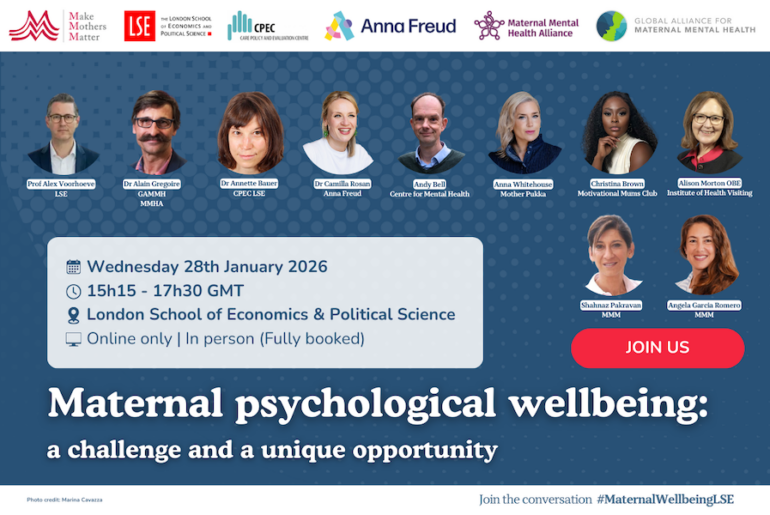
Maternal Psychological Wellbeing: A Challenge and a Unique Opportunity
13.01.26
Wednesday 28 January 2026 | 15:15 – 17:30 GMT London School of Economics & Political Science (LSE) – Live broadcast #MaternalWellbeingLSE Maternal mental health is one of the most pressing

Climate Change: A Maternal Physical and Mental Health Emergency
13.11.25
In the lead-up to the UN climate change conference in Belem, Brazil (COP30), MMM was delighted to collaborate with Dr. Saravanan Thangarajan, a Visiting Scientist & Faculty member at Harvard
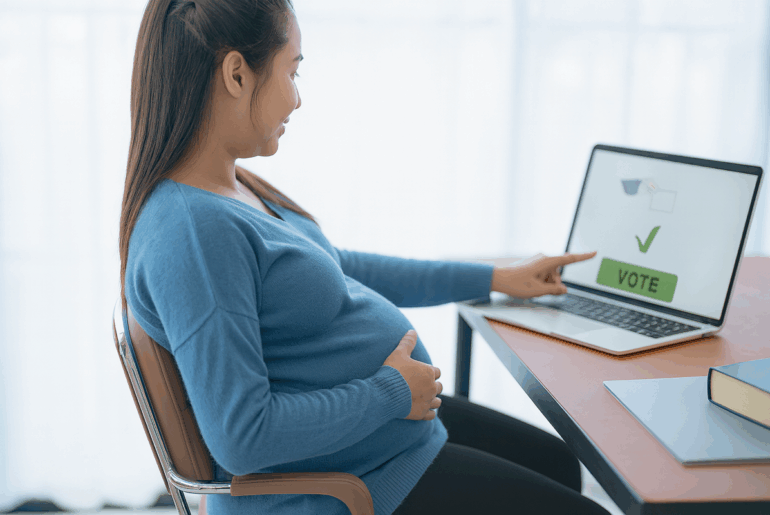
Democracy on Hold: The Hidden Penalty for Parliamentarians Who Become Mothers
27.11.25
The European Parliament adopted a legislative resolution on the amendment of the European Electoral act, allowing Members to vote in plenary by proxy voting during pregnancy and after giving birth.