Sharing the Care to address mothers’ poverty in old age
26.09.22
UN Geneva, Human Rights Council - In this recent oral intervention, MMM once again highlighted the vital link between the inequitable distribution of unpaid care work and women's ability to benefit from an adequate pension in old age. We continue to call for systemic changes supporting a more equitable distribution of this work between men and women and across society.
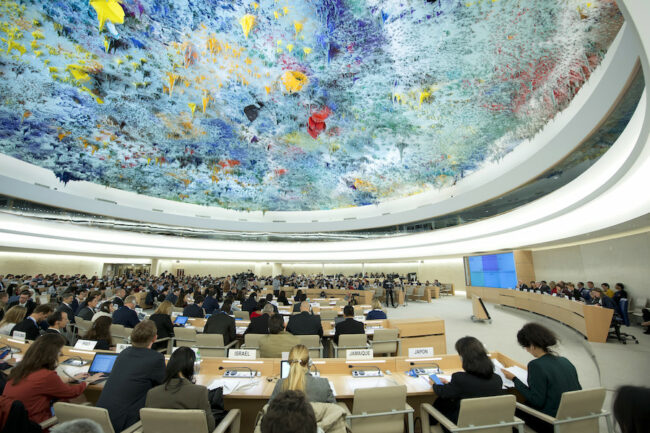
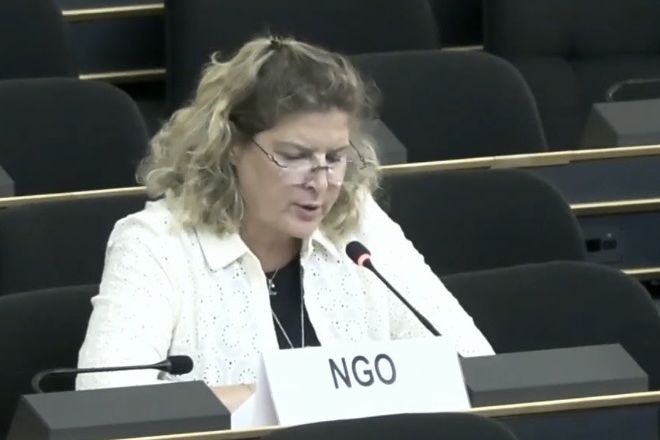
The following is the oral statement delivered by our main representative to the UN in Geneva, Valerie Bichelmeier, during the General Debate on Economic, Social and Cultural Rights, which took place on 21 September during the 51st Session of the Human Rights Council.
Building Back Better is now, and Make Mothers Matter would like to draw attention to the issue of poverty among older women.
Globally, 65% of women of retirement age do not have a regular pension.
Because of the damaging economic impact of COVID 19, even more older women are affected, exposing them to multiple vulnerabilities including social and health.
This situation is not accidental. it is the result of life-long discriminations and inequalities in the public and economic spheres, which all have their roots in the inequitable distribution of unpaid family care work. This work weighs heavily on the shoulders of women, especially mothers, at the cost of their economic independence and adequate social protection.
The indispensable, yet unpaid and unrecognized work of caring for others, sustains our society and our economy; it is also essential for the wellbeing of all. It must therefore be recognized as a collective responsibility and shared more equitably, not only between men and women, but also across society.
Building Back Better is now – and it requires systemic changes. A gender perspective and a human based approach in our economic and social systems is required, to ensure that unpaid care work is more equitably shared, and no mother, no older woman, is left behind.

 Share
Share Share
Share Print
Print Email
Email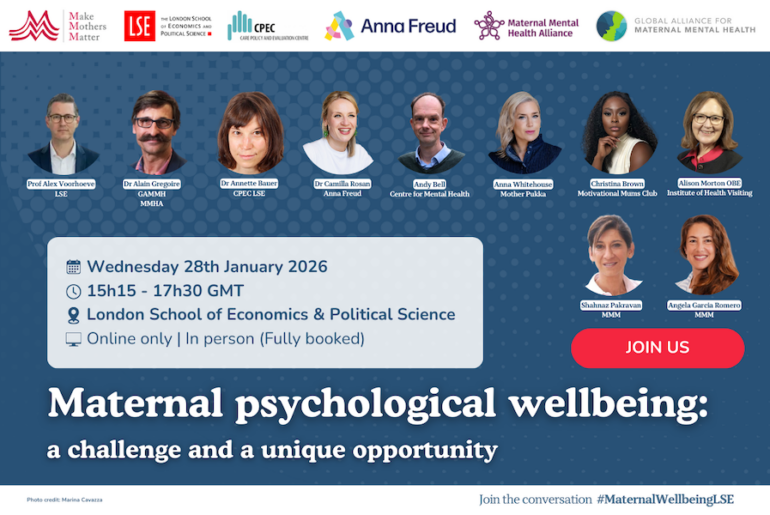
Maternal Psychological Wellbeing: A Challenge and a Unique Opportunity
13.01.26
Wednesday 28 January 2026 | 15:15 – 17:30 GMT London School of Economics & Political Science (LSE) – Live broadcast #MaternalWellbeingLSE Maternal mental health is one of the most pressing

Climate Change: A Maternal Physical and Mental Health Emergency
13.11.25
In the lead-up to the UN climate change conference in Belem, Brazil (COP30), MMM was delighted to collaborate with Dr. Saravanan Thangarajan, a Visiting Scientist & Faculty member at Harvard
Democracy on Hold: The Hidden Penalty for Parliamentarians Who Become Mothers
27.11.25
The European Parliament adopted a legislative resolution on the amendment of the European Electoral act, allowing Members to vote in plenary by proxy voting during pregnancy and after giving birth.