A step forward: New work-life balance package to improve the lives of working parents
26.04.17
Brussels - The European Commission has put forward an ambitious and comprehensive proposal on “Work-Life balance for working parents and carers”.

Make Mothers Matter has joined a Coalition of European NGOs to warmly welcome this initiative. We are pleased to see it reflect our demands for a life-cycle and transversal approach. We are convinced that this initiative has the potential to bring real change in the lives of many Europeans.
First, we welcome the initiatives improving the current leave schemes as well as provisions of quality, affordable and accessible care services and the introduction of the right to request flexible working arrangements. A demand from MMM since several years and a very important measure to enable working mothers to remain or re-entry the labour market.
Some of the measures included are particularly helpful, notably the introduction of a paid paternity leave of ten days at EU level and a minimum payment at sick leave level of parental leave and increased flexibility (it can be taken until 12 years of age of the child and full time or part time). Payment, flexibility and non-transferability have been proven crucial to increase take- up among fathers. The Directive introduces also a new carers’ leave of 5 days per year paid also at sick pay level.
 Share
Share Share
Share Print
Print Email
Email
Maternal Psychological Wellbeing: A Challenge and a Unique Opportunity
13.01.26
Wednesday 28 January 2026 | 15:15 – 17:30 GMT London School of Economics & Political Science (LSE) – Live broadcast #MaternalWellbeingLSE Maternal mental health is one of the most pressing

Climate Change: A Maternal Physical and Mental Health Emergency
13.11.25
In the lead-up to the UN climate change conference in Belem, Brazil (COP30), MMM was delighted to collaborate with Dr. Saravanan Thangarajan, a Visiting Scientist & Faculty member at Harvard
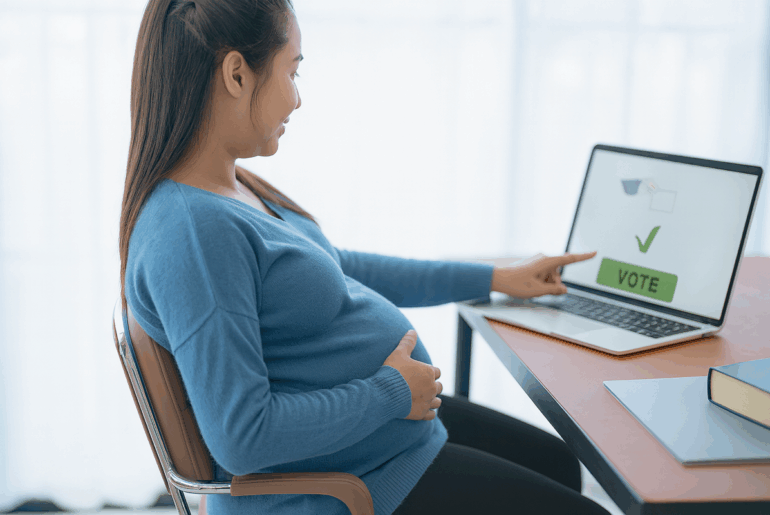
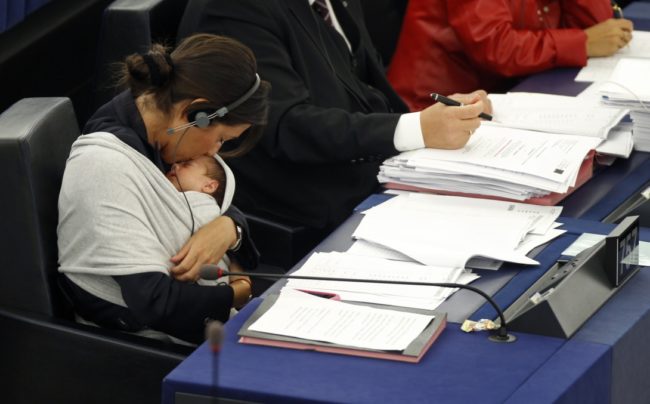
Democracy on Hold: The Hidden Penalty for Parliamentarians Who Become Mothers
27.11.25
The European Parliament adopted a legislative resolution on the amendment of the European Electoral act, allowing Members to vote in plenary by proxy voting during pregnancy and after giving birth.