Who Cares in the Climate Crisis? Gender, Rights, and Resilience
07.11.25
As the world prepares for the next UN Climate Change Conference (COP), Make Mothers Matter (MMM) highlights a crucial yet overlooked truth: care is essential infrastructure. When floods destroy homes or heatwaves strain health systems, it is women, especially mothers, who hold families and communities together. Their unpaid and often invisible care work keeps societies functioning in times of crisis, yet it remains largely unsupported and undervalued in climate policy and financing.

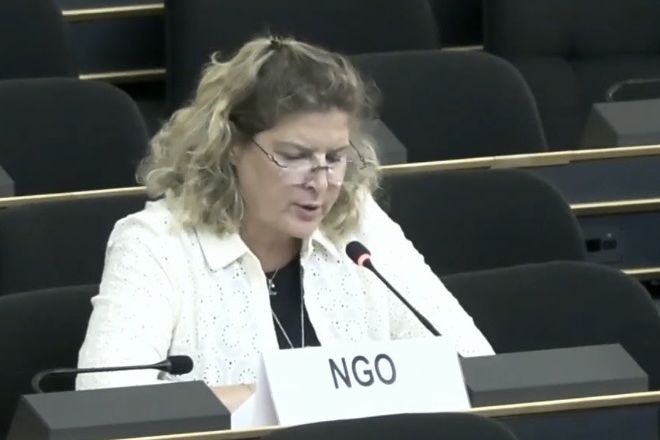
In her recent blog article, “Who Cares in the Climate Crisis? Gender, Rights, and Resilience,” Gizem Demir Nirennold, MMM Representative at the United Nations in Geneva, examines how climate change magnifies care burdens and deepens gender inequality. Drawing on international frameworks such as CEDAW General Recommendation No. 37 and the UNFCCC Gender Action Plan, she argues that without explicitly recognising and redistributing care responsibilities, climate action risks reinforcing existing injustices rather than remedying them.
The article analyses two key case studies, the 2022 monsoon floods in Pakistan and gender-responsive cyclone shelters in Bangladesh, to show both the challenges and solutions. In Pakistan, floods transformed everyday care into emergency survival, as disrupted health services and displacement intensified women’s unpaid work and jeopardised their health and safety. Bangladesh, by contrast, demonstrates how gender-sensitive planning and women’s leadership can reduce risks and strengthen community resilience when care is centred in adaptation design.
The lesson is clear: to build resilient societies, care must be treated as core climate infrastructure, as vital as energy, transport, or water systems. Investing in care means investing in resilience, equality, and human rights.
Echoing the article, Gizem’s video message for the International Day of Care and Support delivers MMM’s key call to action:
“Investing in care means protecting rights, strengthening resilience, and building a more equal and sustainable future for all.”
As COP approaches, MMM urges policymakers to embed care into national climate strategies and adaptation plans. Recognising, valuing, and financing care systems, from childcare and health to water and social protection, is not only a matter of gender justice; it is a cornerstone of climate resilience and sustainable development.
Our message for the International day of Care & Support (29 October)
 Share
Share Share
Share Print
Print Email
Email
Maternal Psychological Wellbeing: A Challenge and a Unique Opportunity
13.01.26
Wednesday 28 January 2026 | 15:15 – 17:30 GMT London School of Economics & Political Science (LSE) – Live broadcast #MaternalWellbeingLSE Maternal mental health is one of the most pressing

Climate Change: A Maternal Physical and Mental Health Emergency
13.11.25
In the lead-up to the UN climate change conference in Belem, Brazil (COP30), MMM was delighted to collaborate with Dr. Saravanan Thangarajan, a Visiting Scientist & Faculty member at Harvard

Democracy on Hold: The Hidden Penalty for Parliamentarians Who Become Mothers
27.11.25
The European Parliament adopted a legislative resolution on the amendment of the European Electoral act, allowing Members to vote in plenary by proxy voting during pregnancy and after giving birth.