Advocating for family needs in the Work-life balance EU directive proposal
31.10.18
Since the European Commission published a proposal of the EU Directive on Work-Life Balance for parents and family carers in April 2017, MMM has been actively following the legislative process and engaging with policy makers. This proposal includes paid paternity leave of 10 days, 4 months paid non-transferable parental leave per parent, paid carer’s leave of 5 days per year and the right to request flexible working conditions (telework, reduction of working time and flexible schedules).

During the month of June 2018, we joined forces with other 3400 NGOs and Trade Unions from all throughout Europe asking Members States to reach a common position. On the 21st June 2018, the Employment Council agreed on a position on the Work-Life Balance Directive and the European Parliament voted the text in July.
In September, discussions among the three institutions (“trialogues”) to reach a common text started and are currently ongoing. We hope that in the next weeks an agreement is formed, and we are working with other members of the civil society to keep the discussions going via social media and other communication means.
Therefore, until the EU Work-Life Balance Directive is formally adopted hopefully by December 2018, we are calling on everyone to spread the word and support us by getting involved in this latest social media wave using the hashtag #IWantWorkLifeBalance.
We have also launched a joint statement on the 5th of November before the 6th and 19th of November trialogues asking to reach an agreement before the end of the year and we included a life-cycle approach:
- EU paternity leave of at least ten days paid at least at 80%;
- Improvement of the parental leave scheme, four months paid at least at 78% of previous earnings until 12 years old of the child and leave to the families the choice to transfer 1 or 2 months to the other parent
- The right to request flexible working arrangements for parents of children until they are 18 years old and carers (telework, flexible schedules and reducing working time)
- EU carers’ leave scheme of 5 days per year paid at least 78% of previous earnings
 Share
Share Share
Share Print
Print Email
Email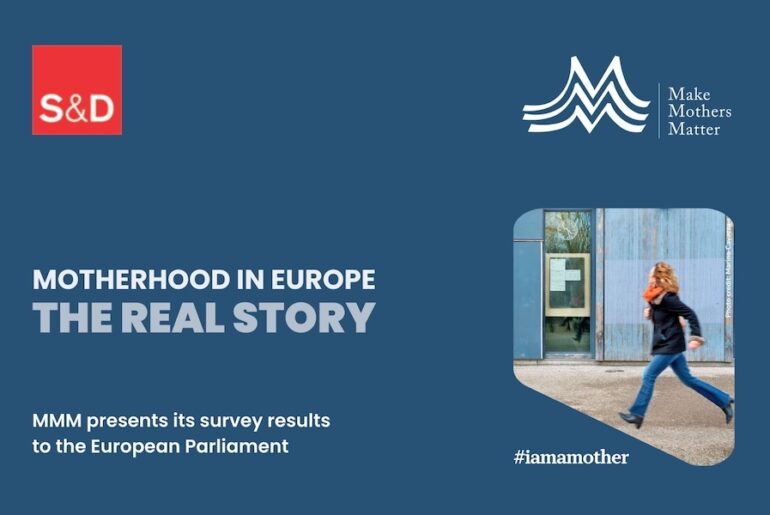
Europe Must Listen to Mothers: Our landmark report heads to the European Parliament
28.08.25
On 22 September 2025, the voices of mothers will take centre stage in Brussels. For the first time, Make Mothers Matter (MMM) will present its State of Motherhood in Europe

Belgian Mothers Face Alarming Rates of Burnout and Perinatal Depression, New EU Survey Finds
03.07.25
Belgian mothers are facing a mental health crisis. According to the State of Motherhood in Europe 2024 survey by Make Mothers Matter (MMM) and Kantar, Belgium reports the highest rates

Parental Mental Health Takes Centre Stage at the French National Assembly
02.04.25
Paris, France – On April 2nd, Make Mothers Matter was honoured to have key findings from its State of Motherhood in Europe 2024 report cited at the French National Assembly