An integrated approach to childcare services from a children’s rights perspective
10.05.22
The European Commission (EC) has announced its new plan to develop a European Care Strategy expected to strengthen long-term care and early childhood education and care, as envisaged under the European pillar of social rights.

The strategy will further help reinforce gender equality and social fairness. The initiative will propose two Council recommendations, on childcare (revision of the Barcelona targets) and on long-term care. The goal of the revision of the Barcelona Targets is to increase women’s participation in the labour market, which will contribute to reaching the 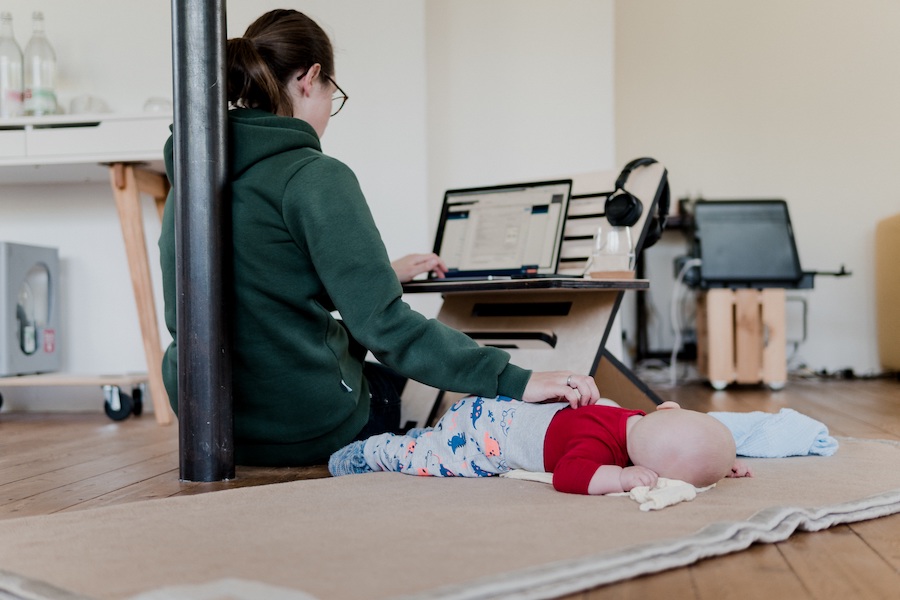 EU’s employment deadline target. At Make Mothers Matter, we believe achieving the Barcelona targets is fundamental to allow women to better conciliate work and family life and to reduce the gender gaps in employment, income, and pension.
To aid the development of the Strategy, MMM contributed to the EC Call for evidence and a joint answer together with its partners of the Alliance for Investing in Children.
MMM has built upon the UN Charter on the Rights of the Child (UNCRC) to formulate recommendations that are centred on children’s rights. Since children’s rights and parents’ rights are interconnected, these recommendations serve to bring about equality for mothers by reinforcing the rights of children and families.
To act in the best interests of the child, accessible, affordable, quality, non-segregated and inclusive early childhood education and care (ECEC) needs to be provided. We recommend, “family centred” solutions (such as Leihomas or “borrow a grandmother” and child minders), as they allow parents to choose from a variety of options based on their needs.
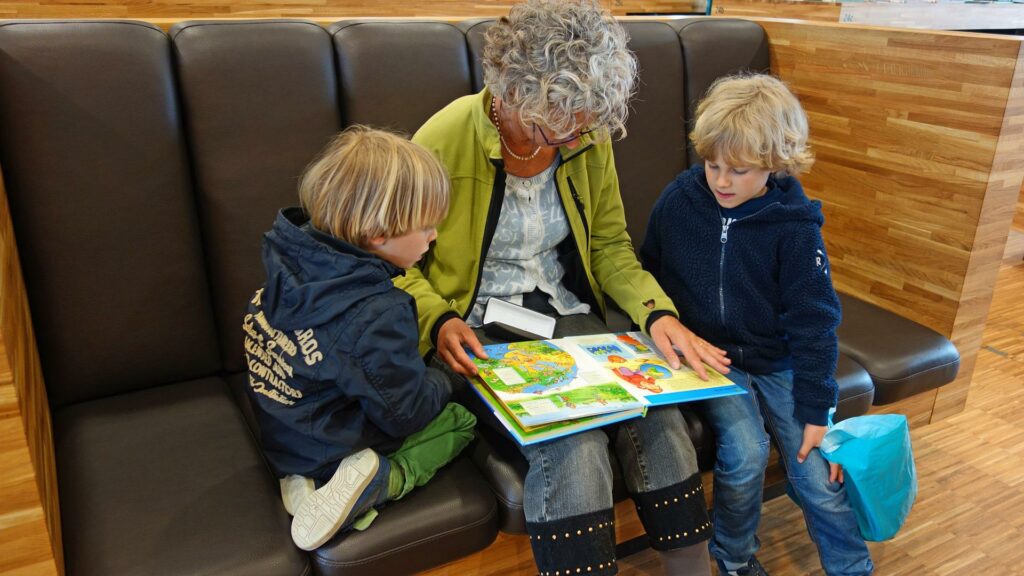
Such solutions also help to redistribute unpaid family care work between men and women and between families and society. MMM puts forward the Finnish ECEC model as policy inspiration for states, as this  system gives parents a choice between outsourced or in-family care without fear of economic or professional consequences.
MMM also calls upon the private sector to uphold their social responsibility to support parents. Companies should recognize the skills acquired by parents while providing informal care. Furthermore, policies that encourage and enable fathers to take parental leave, implementing work-life balance policies and flexible working options for parents and the recognistion of skills acquired by parents while doing care activities can help make companies more parent and child friendly.
These recommendations for the Barcelona targets would make the work place a more flexible and empowering place for parents. They would also help to make childcare more accessible to families from all backgrounds.
See MMM’s full response and joint answer of the Alliance for investing in Children
 Share
Share Share
Share Print
Print Email
Email
Maternal Psychological Wellbeing: A Challenge and a Unique Opportunity
13.01.26
Wednesday 28 January 2026 | 15:15 – 17:30 GMT London School of Economics & Political Science (LSE) – Live broadcast #MaternalWellbeingLSE Maternal mental health is one of the most pressing

Climate Change: A Maternal Physical and Mental Health Emergency
13.11.25
In the lead-up to the UN climate change conference in Belem, Brazil (COP30), MMM was delighted to collaborate with Dr. Saravanan Thangarajan, a Visiting Scientist & Faculty member at Harvard

Democracy on Hold: The Hidden Penalty for Parliamentarians Who Become Mothers
27.11.25
The European Parliament adopted a legislative resolution on the amendment of the European Electoral act, allowing Members to vote in plenary by proxy voting during pregnancy and after giving birth.