Care: The Invisible Force Shaping Society
11.02.26
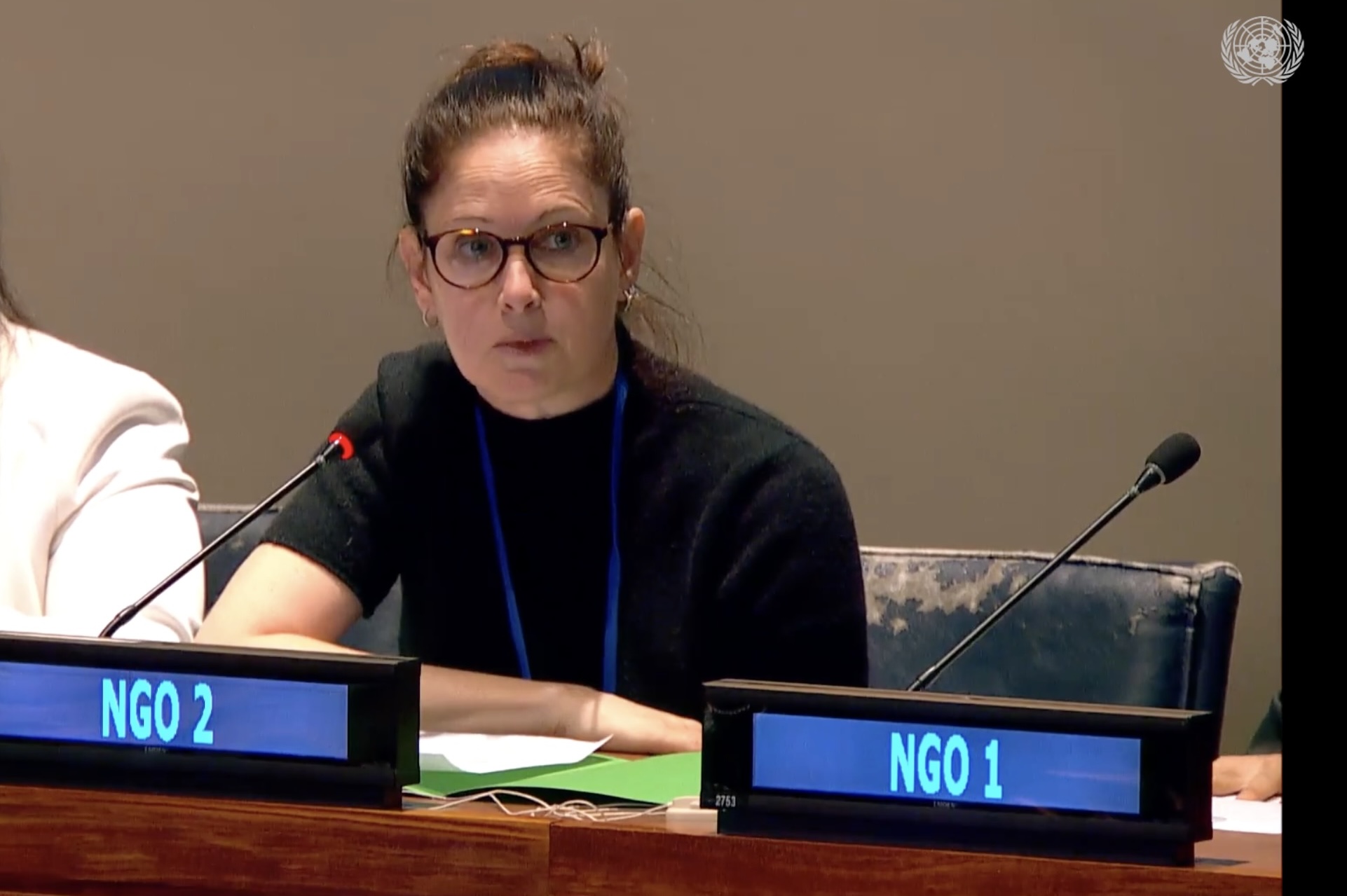
UN New York – At the 64th session of the UN Commission for Social Development, Farah Arabe, MMM Board member and UN representative in New York, urged Member States to prioritize investment in care and to develop comprehensive, coordinated care systems. “Investing in care is not only about supporting caregivers”, she emphasized. “It is about shaping who children become, defining how societies treat vulnerability, and determining what future generations inherit. When we fail to invest, the costs do not disappear—they build up quietly, unevenly, and across generations.”
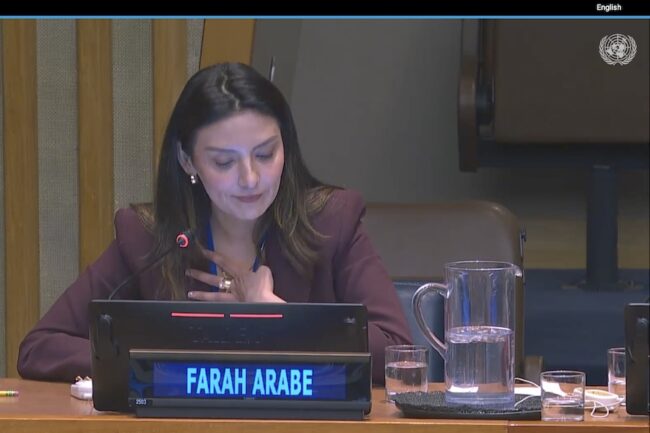
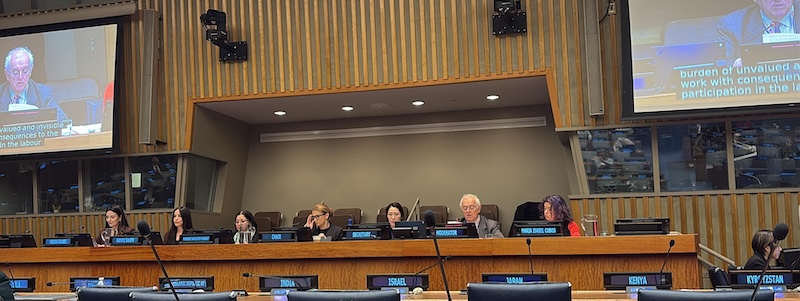
Farah’s powerful intervention was part of the high-level panel discussion on the emerging issues Eradicating poverty and ensuring dignity through resilient care and support systems, which took place on 4th February.
Her three core messages were clear:
- Caregiving is a foundational public good – one that generates far-reaching economic, social, and intergenerational returns.
- The care deficit is systemic, not individual, and disproportionately borne by women—especially mothers.
- Investing in comprehensive care and support systems is among the most strategic and cost-effective choices governments can make to advance gender equality, social inclusion, dignity, and long-term human flourishing.
“If we aspire not merely to human development, but to human flourishing, care must sit at the centre of social development strategies. […]
If social development is about people, then mothers are its foundation—and strong care systems are how we sustain and protect that foundation.”
→ Watch the intervention on the UN Web TV Recording (it starts at about 2:00:00)
MMM also took part in the general discussion of the Commission. In our statement, delivered by Aurelie Cole, MMM UN representative in New York, we also called for the progressive building of strong, equitable care systems as a top priority for social development. We highlighted key components of such care systems:
- Recognising care as a right — the right to care, to receive care, and to self-care — as recommended in 2025 by the Inter-American Court of Human Rights
- Recognising unpaid care as productive work that builds valuable skills for the labour market
- Redistributing unpaid care more equitably between men and women, and across society — with families, communities, the private sector, and governments at all levels sharing responsibilities and costs
- Making unpaid care visible in statistics, starting with SDG Indicator 5.4.1, to enable regular monitoring of care policies
- Ensuring universal social protection — or at least a social protection floor — for unpaid caregivers, including maternity protection and pension credits
- Guaranteeing access to quality, affordable care services for children, older persons, people with disabilities and other dependents
- Developing policy packages to support mothers and other unpaid caregivers, so families are not forced to choose between earning and caring
→ Watch the intervention on UN Web TV (MMM takes the floor at 1:51:00)
See also:
- MMM’s written statement to the Commission on Care, the overlooked dimension of social development and justice
- MMM side-event on Unlocking the power of care: skills, equity, and social transformation
 Share
Share Share
Share Print
Print Email
Email
Maternal Psychological Wellbeing: A Challenge and a Unique Opportunity
13.01.26
Wednesday 28 January 2026 | 15:15 – 17:30 GMT London School of Economics & Political Science (LSE) – Live broadcast #MaternalWellbeingLSE Maternal mental health is one of the most pressing

Climate Change: A Maternal Physical and Mental Health Emergency
13.11.25
In the lead-up to the UN climate change conference in Belem, Brazil (COP30), MMM was delighted to collaborate with Dr. Saravanan Thangarajan, a Visiting Scientist & Faculty member at Harvard
Democracy on Hold: The Hidden Penalty for Parliamentarians Who Become Mothers
27.11.25
The European Parliament adopted a legislative resolution on the amendment of the European Electoral act, allowing Members to vote in plenary by proxy voting during pregnancy and after giving birth.