‘How are you, mum (really)?’ A morning at Bordeaux City Hall to break the silence on maternal mental health
24.06.26
By Angela Garcia Romero, Director of Projects at MMM
On 29 May, we experienced a truly unique morning—both physically and emotionally: moving, insightful, inspiring—where we, mothers, felt seen and understood. It took place during the event “How are you, mum (really)?” at the Bordeaux City Hall.
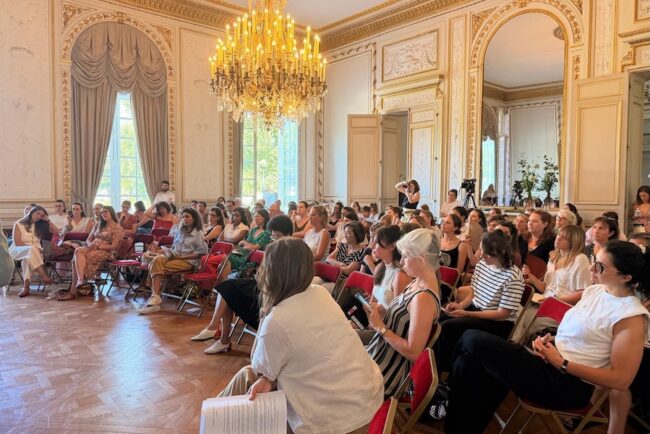
Despite the intense heat across the city, more than 100 women (some with their babies) joined us to address an essential issue that remains far too invisible, yet has a very real impact on our societies: maternal mental health. As shown in the Make Mothers Matter study “State of Motherhood in Europe”, one in two mothers reports having experienced mental health difficulties, and 67% say they feel overloaded.
During this morning, psychologists, researchers, politicians, and civil society representatives spoke openly about this issue.
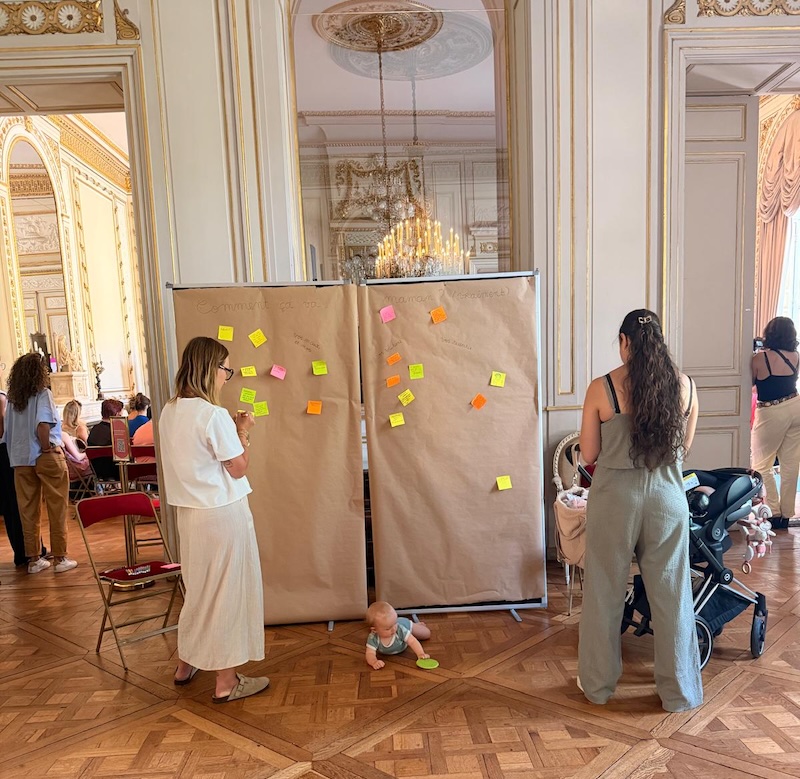
Mothers responded live to the question: “How are you, mum (really)?” Some of their answers were: “Exhausted. Misunderstood. Alone. Overwhelmed. Judged. Overrun. Lost. Ashamed.” This confirms how important the question is—and the relevance of the event
We began with a reading of a text by Anne-Sophie Brasme, “Letter to the one who is also being born,” which set the tone and brought up emotions linked to our own experiences of motherhood for many people in the room. This opened up a sincere, heartfelt conversation first with Ms. Chantal Bergey (Deputy Mayor in charge of Health and Gender Equality, and psychiatrist at CH Charles Perrens) and Silvia Masin (CAF).
The morning kicked off with my presentation on some key findings from the Make Mothers Matter survey. This was followed by two panels featuring ten speakers in total. In the first panel, we tried to understand concepts around maternal mental health (parental burnout, perinatal depression, anxiety, mental load, “matrescence,” etc.) and the structural mechanisms that affect it. Because when we try to understand the causes, we realize the responsibility is not individual, but societal: a labour market still rigid for those with caring responsibilities, unequal family dynamics that place a disproportionate load on mothers, maternity and paternity leave that is insufficient in both length and compensation, and more. After this discussion, one conclusion emerged: women are not more fragile—they are more exposed.
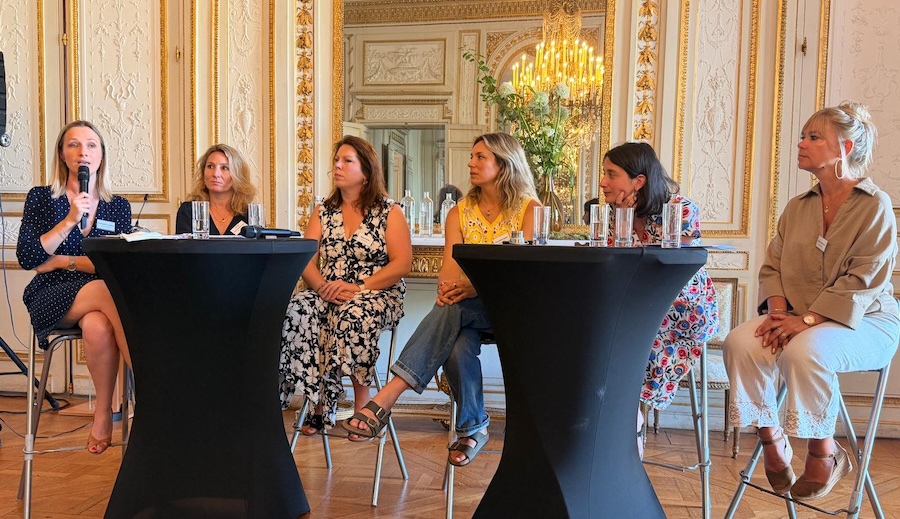
From left to right, the speakers of the first panel: Bérangère Couillard (President of the High Council for Equality), Anne-Sophie Vives (L’Burn), Mélanie Balès (clinical psychologist at Centre Hospitalier Charles Perrens), Clémentine Sarlat (journalist, creator of the podcast La Matrescence), Dr. Léa Rivière (psychiatrist, practitioner at Centre Hospitalier Charles Perrens), Sabrina Tanquerel (research lecturer at EM Normandie Business School)
The second panel focused on solutions, moving away from the idea of “how can a mother manage better?” to instead ask how the “village”—the wider ecosystem—can better support them. The speakers presented existing solutions: civic initiatives that have built real communities and have genuinely reached and supported mothers.
The conclusion was clear: we already know many of the solutions; the challenge is to make them visible and support them. And above all, we must listen to mothers to understand what they are missing.
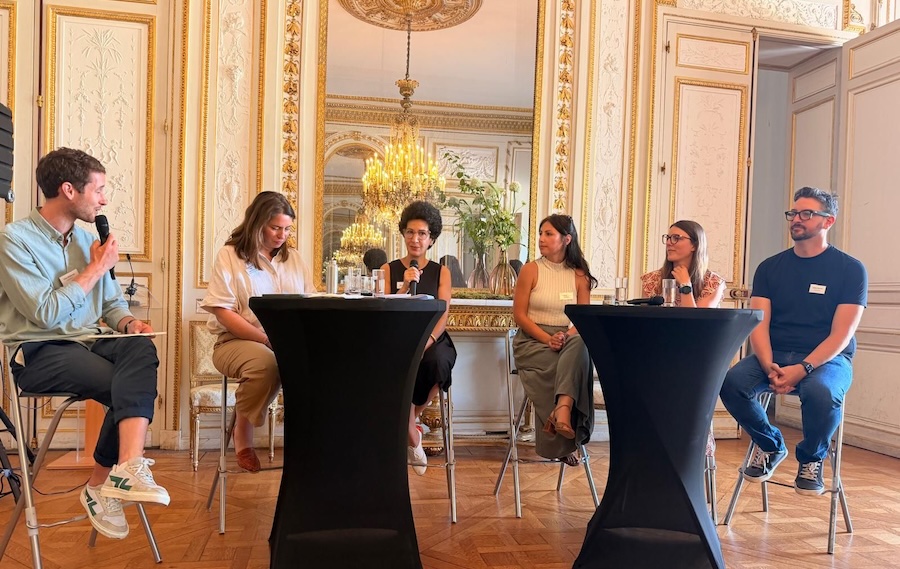
From left to right, the speakers of the first panel: Bérangère Couillard (President of the High Council for Equality), Anne-Sophie Vives (L’Burn), Mélanie Balès (clinical psychologist at Centre Hospitalier Charles Perrens), Clémentine Sarlat (journalist, creator of the podcast La Matrescence), Dr. Léa Rivière (psychiatrist, practitioner at Centre Hospitalier Charles Perrens), Sabrina Tanquerel (research lecturer at EM Normandie Business School)
Several measures were identified during this rich discussion:
- Health professionals, as well as all those in contact with mothers and fathers, must be better trained to raise awareness and prevent issues early.
- Maternal mental health and the challenges of motherhood must be talked about more openly to break the taboo.
- We need longer (and well-paid) paternity leave to allow fathers to be more involved in care and parenting.
- Workplaces must adapt to the realities and challenges of parenting (rather than the other way around).
- The “village” is essential, because raising children alone without losing physical or mental health is extremely difficult. It must be rebuilt.
We ended on an emotional and uplifting note with an Oscars video, in which actors and actresses at the peak of their careers, receiving the most prestigious award, thank their mothers—for supporting them, teaching them life’s most important lessons, and for their strength. Mothers, like fathers, are true pillars in children’s lives. And a mother in good mental health is one of the most essential supports for future generations.
This event is the result of months of preparation, brainstorming sessions, reflection, sharing, laughter, and collaboration with partners I deeply admire and with whom it was a pleasure to work: Maud Robache and Marie-Caroline Caillet from L’Burn, Claire Fourcade from Bande de mères, and Monia Douadi from Association des Familles Monoparentales (Association of Single-Parent Families).
Thank you to all the speakers, participants, and co-organisers!
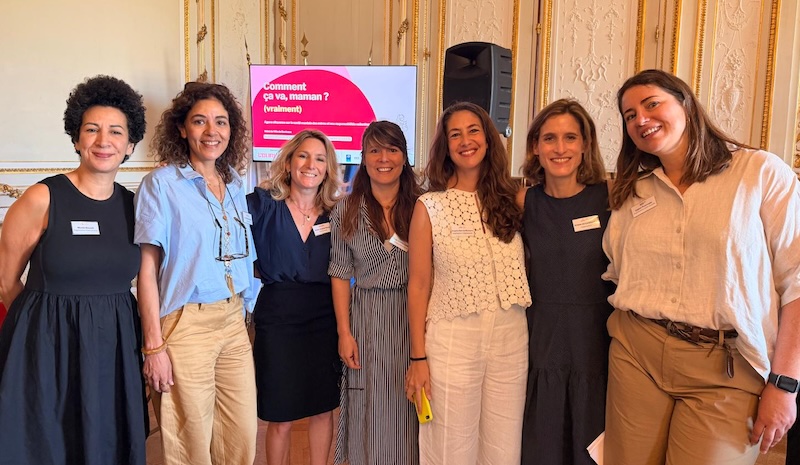
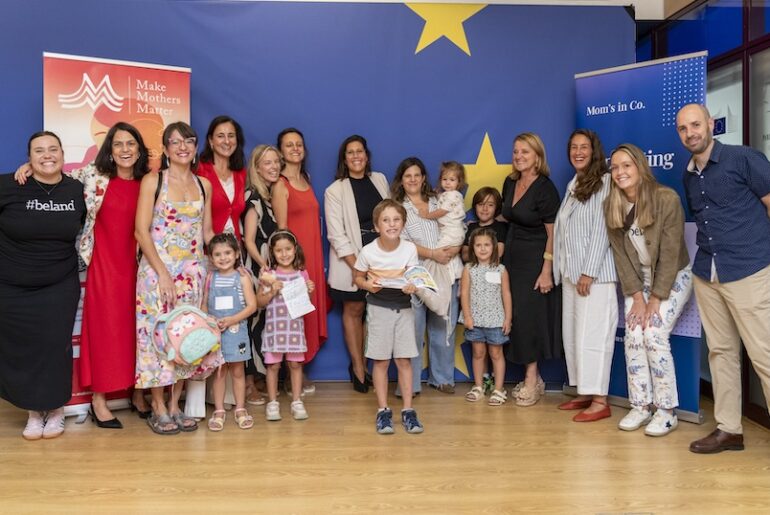
From left to right: Monia Douadi (President of the Association of Single-Parent Families), Afaf Abounouadar (Director of Make Mothers Matter), Anne-Sophie Vives (President of L’Burn), Marie-Caroline Caillet (strategy and advocacy at L’Burn), Angela Garcia Romero (Project Director, Make Mothers Matter), Arianne de Liedekerke (Network Coordinator, Make Mothers Matter), Claire Fourcade (founder and director of Bande de Mères).
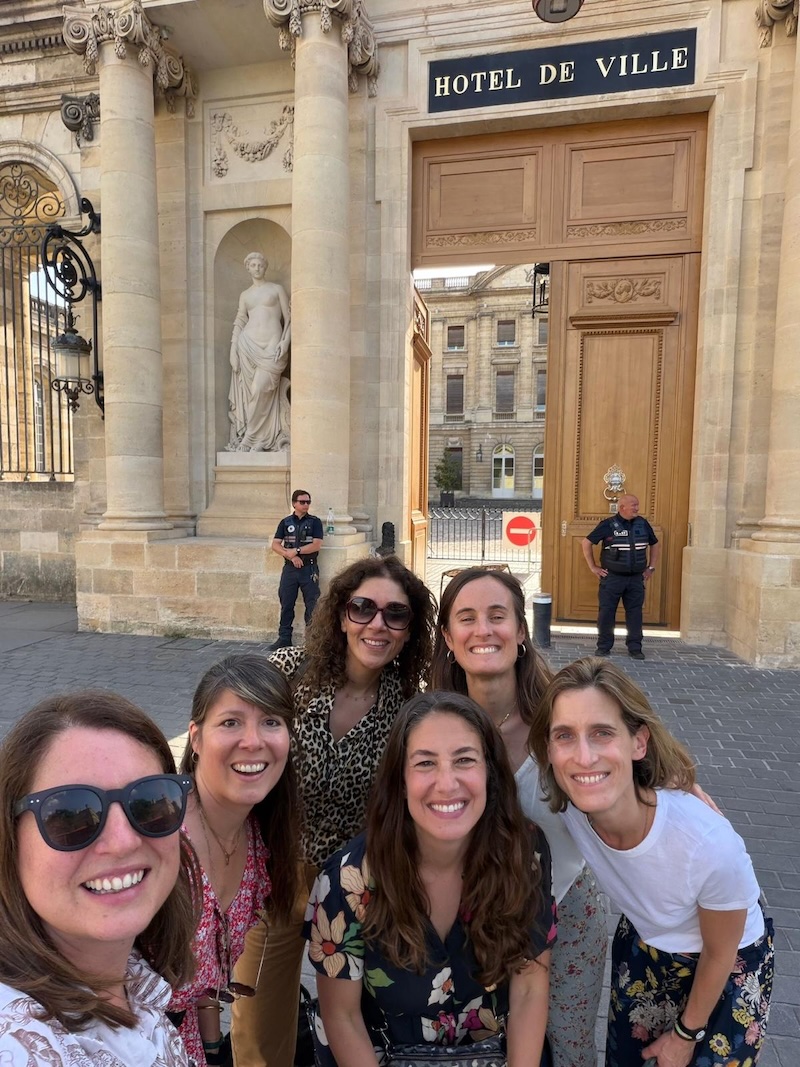
And thank you to Maud Robache (communications, L’Burn—top right) for her magic in communications and logistics!
 Share
Share Share
Share Print
Print Email
Email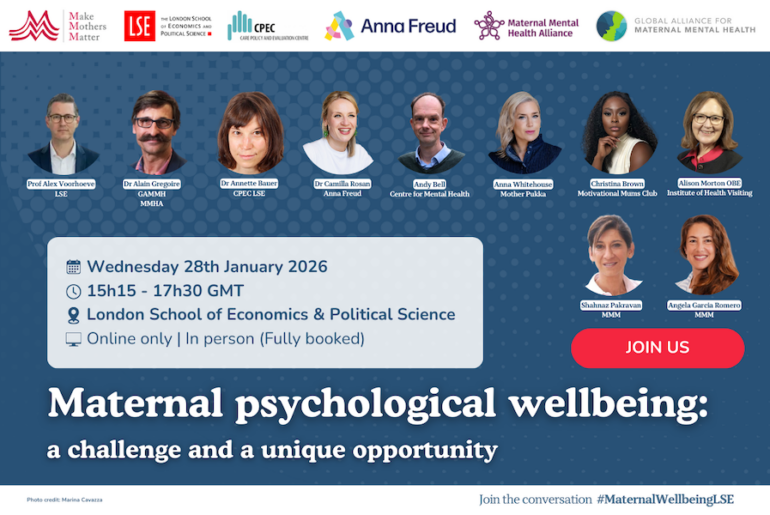
Maternal Psychological Wellbeing: A Challenge and a Unique Opportunity
13.01.26
Wednesday 28 January 2026 | 15:15 – 17:30 GMT London School of Economics & Political Science (LSE) – Live broadcast #MaternalWellbeingLSE Maternal mental health is one of the most pressing

Climate Change: A Maternal Physical and Mental Health Emergency
13.11.25
In the lead-up to the UN climate change conference in Belem, Brazil (COP30), MMM was delighted to collaborate with Dr. Saravanan Thangarajan, a Visiting Scientist & Faculty member at Harvard
Democracy on Hold: The Hidden Penalty for Parliamentarians Who Become Mothers
27.11.25
The European Parliament adopted a legislative resolution on the amendment of the European Electoral act, allowing Members to vote in plenary by proxy voting during pregnancy and after giving birth.