MMM joins the Wellbeing Economy Alliance
17.09.20
We are delighted to announce MMM’s recent joining of the Wellbeing Economy Alliance (WEAll), a collaboration of organisations, alliances, movements and individuals working towards a wellbeing economy, i.e. an economy that prioritizes the wellbeing of people and the planet.
WEAll was born out of a number of local and global movements, whose pioneering work formed the foundations of their theory of change.
Now, with over 100 organisational members and over 50 renowned academics in their network, WEAll is a leading and collaborative voice for economic system change.
Moving to a wellbeing economy requires moving “beyond GDP”. Feminist economists have long denounced Gross Domestic Product (GDP) as a flawed economic indicator that is only a measure of economic activity and does not necessarily reflect wellbeing. It is also blind to unpaid care work and environmental degradation.
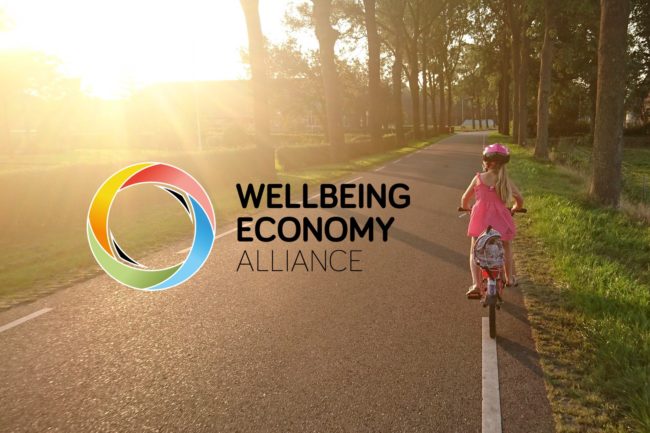
Instead, according to their Advocacy and Influencing Lead Dr Katherine Trebeck: “Rather than measure GDP, why not ask countries to measure the number of girls riding bikes to school?”
We look forward to working closely and synergistically with WEAll in addressing the urgent need for a decisive shift in our economic thinking. Because at MMM, we believe that to build back better, we need to make our economies work for the people rather than the other way around.
And we believe that valuing and supporting Care and Education, including the unpaid care work of mothers, is an essential component of the wellbeing economy and its sustainability.
See also
 Share
Share Share
Share Print
Print Email
Email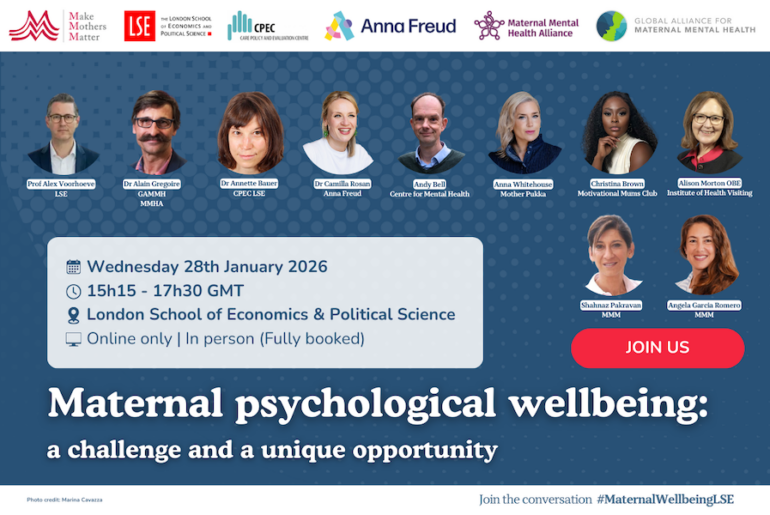
Maternal Psychological Wellbeing: A Challenge and a Unique Opportunity
13.01.26
Wednesday 28 January 2026 | 15:15 – 17:30 GMT London School of Economics & Political Science (LSE) – Live broadcast #MaternalWellbeingLSE Maternal mental health is one of the most pressing

Climate Change: A Maternal Physical and Mental Health Emergency
13.11.25
In the lead-up to the UN climate change conference in Belem, Brazil (COP30), MMM was delighted to collaborate with Dr. Saravanan Thangarajan, a Visiting Scientist & Faculty member at Harvard
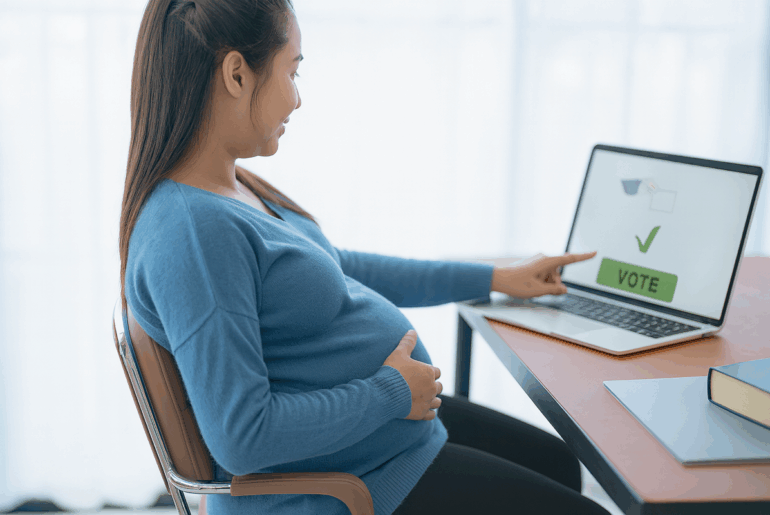
Democracy on Hold: The Hidden Penalty for Parliamentarians Who Become Mothers
27.11.25
The European Parliament adopted a legislative resolution on the amendment of the European Electoral act, allowing Members to vote in plenary by proxy voting during pregnancy and after giving birth.