Motherhood and Entrepreneurship: Creating the Conditions for Businesses to Thrive
23.10.26
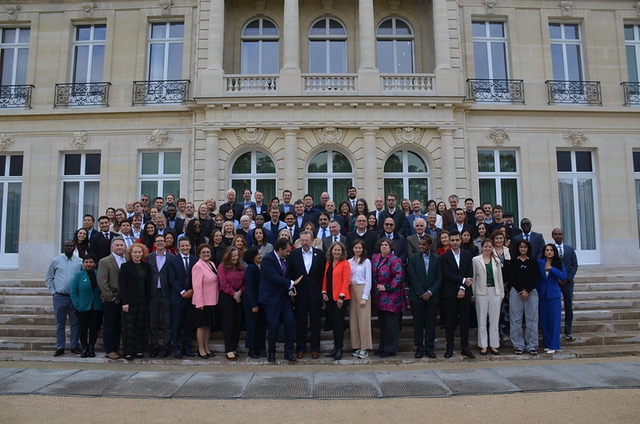
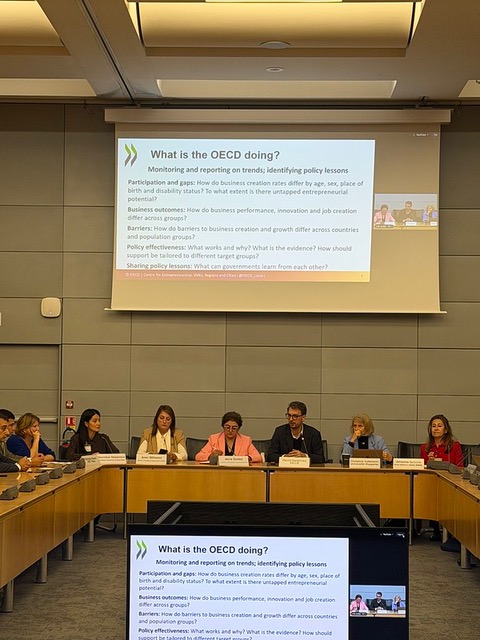
Make Mothers Matter was recently invited to speak at the SME World Forum in Paris, organised by the International Council for Small Business (ICSB) and the OECD. Featuring on the Women and Youth Entrepreneurship panel, our central message, delivered by Johanna Schima, MMM’s head of EU delegation, emphasised that starting a business is not the same as building one for growth. If the aim of entrepreneurship is to drive innovation, productivity and inclusive economic development, we must look beyond business creation and address the conditions that help entrepreneurs succeed.
Entrepreneurship is not always an empowering choice
Starting a business can bring independence, flexibility and new economic opportunities. But it can also be a response to limited employment options, inflexible working conditions, inadequate childcare or exclusion from professional networks. Research by Dr. Claudio Bonvino (Politecnico di Milano) and Dr. Andrea Odille Bosio (University of Bergamo)[1], based on Make Mothers Matter’s survey of 9,600 mothers in 12 European countries, looked at occupational choices after childbirth. It shows that difficult circumstances do not automatically push women into entrepreneurship. Depending on their opportunities and constraints, mothers may choose self-employment, full-time or part-time work, staying at home or, in some cases, unemployment.
Self-employment can offer more control over working hours, but it can also mean irregular income, long working days and limited social protection. We stressed that our aim should be to ensure mothers have genuine choices and the conditions to build viable enterprises.
The motherhood penalty remains a structural barrier
The economic and social disadvantages women face as a result of motherhood limit access to finance, professional networks and innovation ecosystems. Unequal care responsibilities, time poverty and assumptions about mothers’ availability, ambition and growth potential can hold back their businesses. The World Bank estimates that removing such barriers could generate between US$12 and 28 trillion in global economic gains. Tackling them requires affordable and reliable childcare, a fairer distribution of unpaid care, and entrepreneurship support tailored to caregivers’ realities.
Access to finance, networks and growth opportunities
MMM is a partner in BAC4SHC (Business Angels and Crowdinvestors for Startups’ Human Capital), an EU-funded project. Its survey findings point to a gender imbalance in early-stage finance: female-led startups receive only 6.43% of business angel investments, compared with 74.29% for male-led ventures. Female business angels, by contrast, allocate 42% of their portfolios to female-led or mixed-gender teams.
These figures do not explain the causes of the disparity, but they raise important questions about who accesses investment networks, how opportunities are evaluated and which entrepreneurs are seen as having growth potential. For mothers, limited time and networks restrict access to capital, and insufficient capital makes it harder to hire staff, adopt technology or enter new markets. Access to finance must therefore be seen as part of a wider ecosystem that includes time, skills, networks, market access and social protection.
Redefining entrepreneurial success
Entrepreneurship policies too often focus on the number of startups created. We also need to ask whether businesses survive, grow their revenues, innovate, recruit and attract follow-on investment. Success should not be measured only by the creation of large companies: small businesses are equally valuable, as long as they stay small by choice and not because barriers prevent them from growing.
Four priorities for action
- Recognise unpaid care work in entrepreneurship policies, through affordable childcare, flexible training, mentoring and networking.
- Improve access to finance and networks, and support businesses beyond the start-up phase.
- Measure business growth and outcomes, using data on gender and parental status to see who benefits from existing support and where barriers remain.
- Strengthen economic security through quality jobs, parental leave and social protection, so that entrepreneurship is a genuine choice, not a necessity.
MMM’s message
Entrepreneurial growth depends on more than capital. It requires an ecosystem that recognises unpaid care work and provides mothers with access to finance, skills, networks and social protection. Businesses and investors must broaden their understanding of entrepreneurial potential; academia must look beyond who starts businesses to examine who can sustain and grow them; and policymakers must tackle the structural barriers that hold mothers back.
It is time to move beyond counting how many businesses are created and start asking whether all entrepreneurs have a fair opportunity to make their businesses thrive. Motherhood should never be a barrier to entrepreneurial ambition or economic opportunity.
[1] The related manuscript is currently under review for publication.
 Share
 Share
 Print
 Email
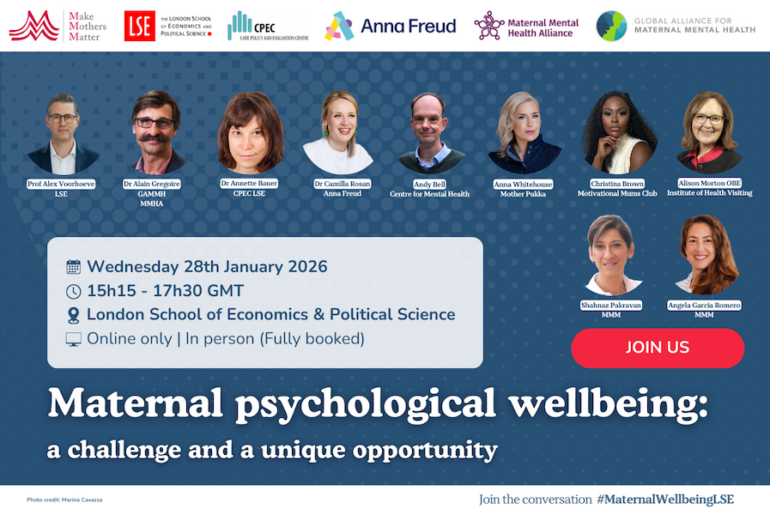
Maternal Psychological Wellbeing: A Challenge and a Unique Opportunity
13.01.26
Wednesday 28 January 2026 | 15:15 – 17:30 GMT London School of Economics & Political Science (LSE) – Live broadcast #MaternalWellbeingLSE Maternal mental health is one of the most pressing
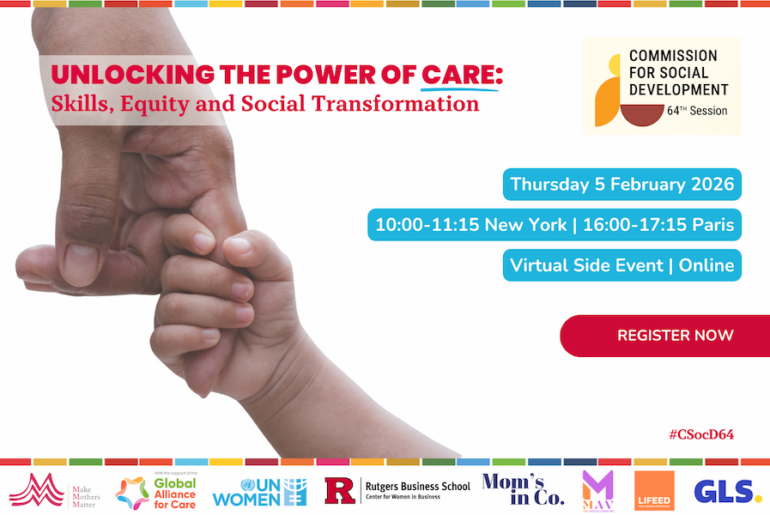
Unlocking the Power of Care: Skills, Equity, and Social Transformation
09.01.26
UN New York – Join us online on 5th February for an official side-event to the 64th UN Commission for Social Development, which will focus on how harnessing the skills
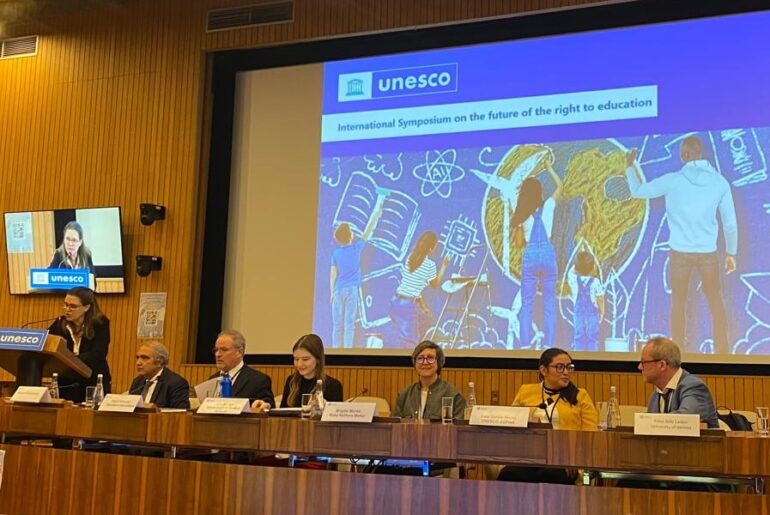
The Future of the Right to Education: Make Mothers Matter at UNESCO to Bring Parents’ Voices Forward
15.12.25
UNESCO, Paris – On the occasion of the 65th anniversary of the 1960 Convention against Discrimination in Education, UNESCO brought together the global community at an International Symposium on the