Mothers at the Heart of the European Parliament Action Plan on Women’s Health
29.11.26
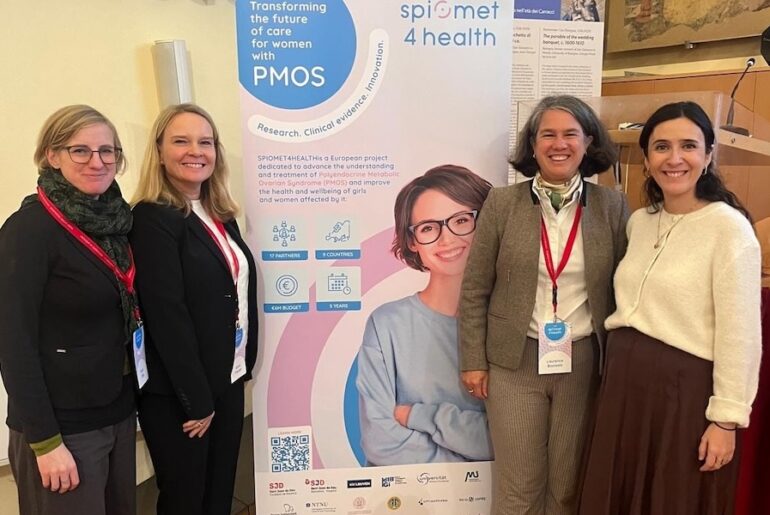
Make Mothers Matter (MMM) was invited by MEP Gabriela Firea (S&D Group) to contribute to the European Parliament Action Plan on Women's Health and to speak at the event launching it, A Life Stage Approach to Access, Prevention and Care. The Action Plan aims to advance women's health in the EU through a life stage approach to prevention, access and care. MMM's intervention focused on the stage where health, family and work meet: pregnancy, birth and the years of caring for young children.
Respect in maternity care
Every woman has the right to give, refuse or withdraw consent at any time. Yet thousands of testimonies across Europe describe disrespect and coercion in childbirth, especially for Roma, migrant, refugee, single and disabled women. Informal payments, distance and fear of deportation keep others from care altogether. Rushed labour wards and early discharge cannot become reasons to set aside a woman’s dignity.
The invisible gap: maternal mental health
Globally, nearly 1 in 5 women develop a mental health condition during pregnancy or in the year after birth, yet only 20% are ever identified. Up to 70% of women who receive no early intervention develop symptoms that persist through the postpartum period and infancy. For the mother, this means a higher risk of later episodes. For the child, it affects bonding and emotional and cognitive development, and early adversity is passed from one generation to the next. Research from the London School of Economics shows that integrated perinatal mental health care is not only effective but economically sound.
MMM therefore asked for two things in the Action Plan:
- Respectful maternity care based on informed consent, universal, accessible and affordable for every woman, wherever she lives and whatever language she speaks.
- Maternal care that includes mental health: universal, routine screening in prenatal and postnatal care with validated tools and national guidelines, training for midwives, obstetricians and other providers, and community-based support that follows mothers and children through the first 1,000 days.
There are promising examples. The UK government is reviewing maternity services with a view to integrating mental and physical health, and Norway has announced an update of its postnatal care guidelines to include mental health.
The penalty that comes later
The story does not end after the first year. In 2024, 70.8% of women in the EU were in employment, compared with 80.8% of men, and women are more than three times as likely to work part-time (27.8% against 7.7%). Unequal care responsibilities keep 7.7 million women out of the labour market, against 450,000 men. The Commission estimates that closing the gender employment gap could add €3.15 trillion to EU GDP by 2050.
The main health penalty of motherhood at work appears not during pregnancy but years later. MMM’s survey of almost 10,000 mothers in 12 European countries found that half reported a mental health condition and 67% feel overloaded. A 2024 Swiss study found that antidepressant use among working mothers rose by 50% after childbirth and by 75% by the child’s sixth birthday, driven by sustained care responsibilities and lack of time rather than birth itself. Research on sick leave shows a gender gap opening after the first child that is still visible eight years later.

What workplaces and policy can do
Motherhood is not a temporary deviation from the norm. It is a structural reality of Europe’s labour market, and workplaces must be designed accordingly: flexible working, affordable and accessible care services, and a supported return to work. Policies such as the Quality Jobs Act and the Work-Life Balance Directive must address the long-term mental health and career penalties of caregiving, and research should recognise motherhood as a societal issue, not a private one.
A healthier Europe starts with mothers
If the Action Plan gets this right, a mother is noticed. Someone asks how she is really doing, and she is screened, supported and treated with respect. Her workplace makes room for her as a mother, and she does not have to choose between her health, her family and her career. When she is well, her child thrives, her family is stable and our economy keeps her talent.
Let this be the moment Europe stops treating maternal health as a short episode and starts treating it as the foundation of a healthy society.
Access the Action Plan here
 Share
 Share
 Print
 Email
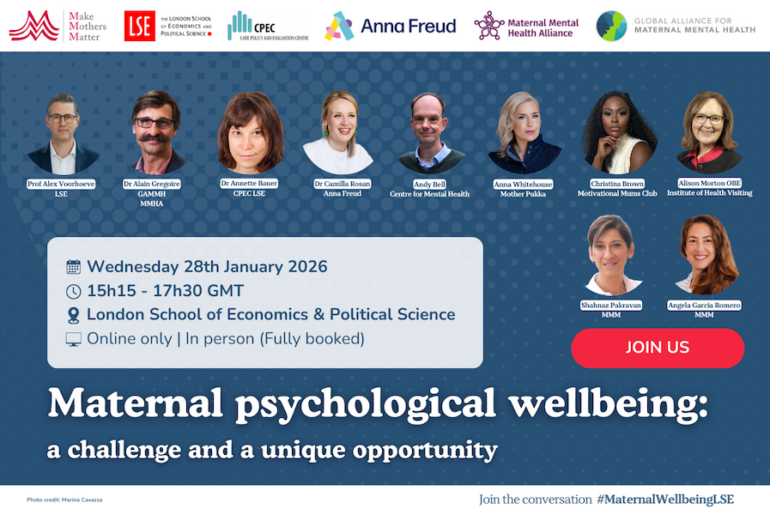
Maternal Psychological Wellbeing: A Challenge and a Unique Opportunity
13.01.26
Wednesday 28 January 2026 | 15:15 – 17:30 GMT London School of Economics & Political Science (LSE) – Live broadcast #MaternalWellbeingLSE Maternal mental health is one of the most pressing
Unlocking the Power of Care: Skills, Equity, and Social Transformation
09.01.26
UN New York – Join us online on 5th February for an official side-event to the 64th UN Commission for Social Development, which will focus on how harnessing the skills
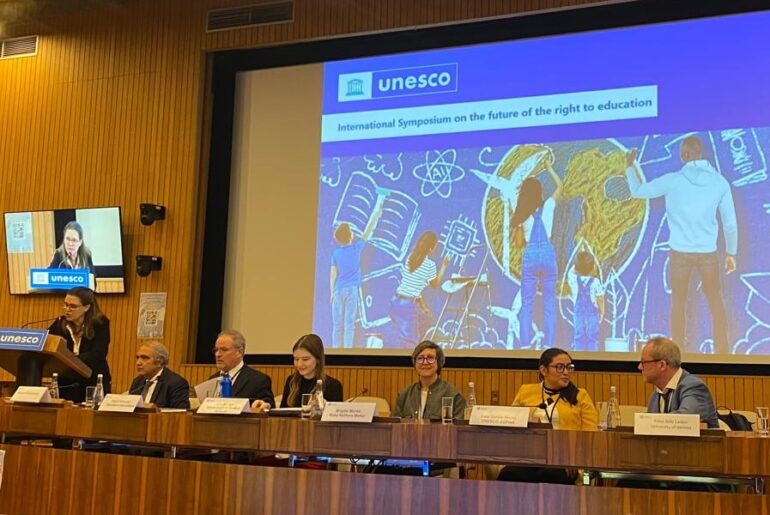
The Future of the Right to Education: Make Mothers Matter at UNESCO to Bring Parents’ Voices Forward
15.12.25
UNESCO, Paris – On the occasion of the 65th anniversary of the 1960 Convention against Discrimination in Education, UNESCO brought together the global community at an International Symposium on the