Opening Doors, Breaking Isolation: The Everyday Work of Gender Equality
22.09.26
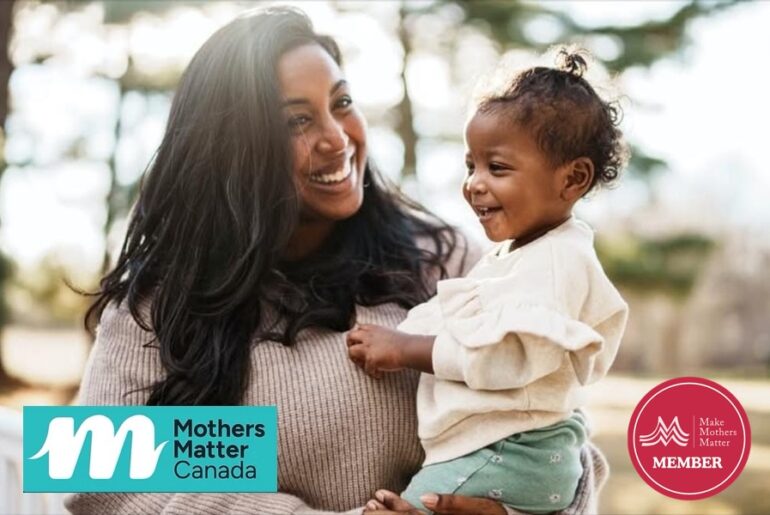
For Gender Equality Week in Canada, we’re proud to amplify the work of our Network member Mothers Matter Canada, who demonstrate through this blog post written by Yusra Qadir, their chief programs and advocacy officer, how something as simple as human connection can help alleviate isolation. Through its home visiting programmes, 1,716 mothers from 96 countries were reached in 2024–25 — helping them build connections, confidence and pathways into their communities and employment.
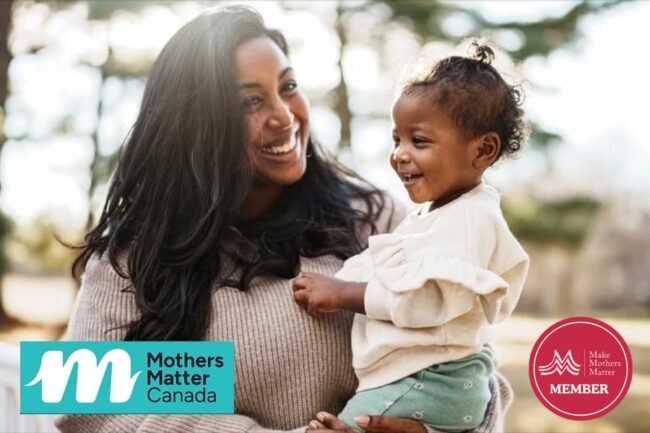
“It was hard for me. I was isolated for a few years,” said Genet, an immigrant mother of four. Before coming to Canada, she had been a teacher for ten years in Eritrea and was deeply connected to her community.
Her words echo what we hear from newcomer and racialized mothers across Canada. At Mothers Matter Canada, we have learned that breaking isolation is not simply about helping women feel less lonely: it’s part of advancing gender equality.
Isolation puts distance between a woman and the everyday networks that help her move forward: the trusted friend who provides emotional support, the colleague who shares a job lead, the neighbour who lends a hand, a person who asks, “Have you thought about doing this?”
For a mother starting over in a new country while raising young children, rebuilding those connections can be extraordinarily difficult. Add low income, language barriers and caregiving responsibilities, and opportunities can move even further out of reach.
The First Knock
When Genet opened her door to an At Home In Canada Home Visitor, she opened her door to much more: community, parenting support, services, school connections, friendships and, employment opportunities.
In 2024–25, Mothers Matter Canada’s home visiting programs reached 1,716 mothers and 1,890 children from 96 countries, speaking 99 languages. Isolation was the common thread woven through their stories.
These women did not lack ability or ambition: 93% had post-secondary education. Many arrived with professional experience and skills. What they lacked was a way into the community, networks and institutions around them.
Home Visiting: Creating A Way In
Rather than waiting for mothers facing the greatest barriers to find and access services, Home Visitors bring support to them. Often, they understand the mother’s language, culture and, most importantly – they have carried the burden of starting life again somewhere new.
Last year, they delivered 43,000+ home visits. They helped mothers prepare their children for school, shared information about services, events and opportunities almost 30,000 times – that averages out to 17 times for each mother in the program.<
They also did the small, human things that numbers cannot truly capture: helping with filling out a form, navigating a doctor’s appointment, preparing for a parent-child meeting at school, decoding transit to get to the food bank, or encouraging a mother to try something she did not yet believe she could do.
Khadija described what that meant for her: “I found my way into community and friendships through programs for my children. They were my window to the outside world… No matter how low I felt, my motivation was to provide the best chance at life to my children.”
She remembers taking buses and trains, and walking with three children, rain or shine, because she wanted them to access opportunities she never had herself.
Across our programs, we see what happens when those journeys accumulate:
- The proportion of mothers who said they felt they belonged in their neighbourhood grew from 37% to 69%.
- Mothers reporting having three or more neighbourhood friends increased from 31% to 58%.
When Connection Becomes Economic Opportunity
Our program model creates a pathway for the mother receiving a home visit today to become the Home Visitor tomorrow. Last year, 56% of Home Visitors employed by our partners were former program participants. For many, it is their first job in Canada.
Experiences that don’t always make it on a conventional résumé or can be viewed negatively by employers become professional strengths for our programs: raising children across cultures, speaking multiple languages, knowing a community from the inside, and understanding what it feels like to arrive somewhere new… without a network.
This is what gender equality can look like in everyday life:
- A mother who no longer needs someone beside her to take the train.
- A mother who knows which service to call to support herself and her family.
- A mother who has the confidence, community, and connections to support and advocate for her child
- A mother earning her first canadian paycheque.
- A mother whose children watch her build a life, not simply adjust to one.
For us, gender equality begins with something as simple as a knock at the door.
A mother opens it and finds another woman standing there: someone who sees her, believes in her, and reminds her that she doesn’t have to find her way alone.
Until one day, she is the one doing the knocking, offering another mother the same support that helped her build a life in a new country.
The above contribution was written by Yusra Qadir, Chief Programs and Advocacy Officer at Mothers Matter Canada, our Network member.
 Share
Share Share
Share Print
Print Email
Email
Maternal Psychological Wellbeing: A Challenge and a Unique Opportunity
13.01.26
Wednesday 28 January 2026 | 15:15 – 17:30 GMT London School of Economics & Political Science (LSE) – Live broadcast #MaternalWellbeingLSE Maternal mental health is one of the most pressing

Climate Change: A Maternal Physical and Mental Health Emergency
13.11.25
In the lead-up to the UN climate change conference in Belem, Brazil (COP30), MMM was delighted to collaborate with Dr. Saravanan Thangarajan, a Visiting Scientist & Faculty member at Harvard
Democracy on Hold: The Hidden Penalty for Parliamentarians Who Become Mothers
27.11.25
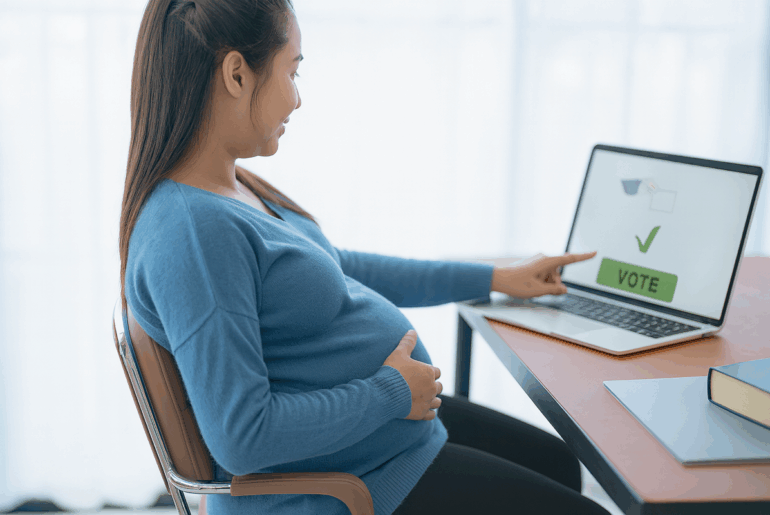
The European Parliament adopted a legislative resolution on the amendment of the European Electoral act, allowing Members to vote in plenary by proxy voting during pregnancy and after giving birth.