Motherhood Penalty: Care Is Not a Private Matter
17.09.26
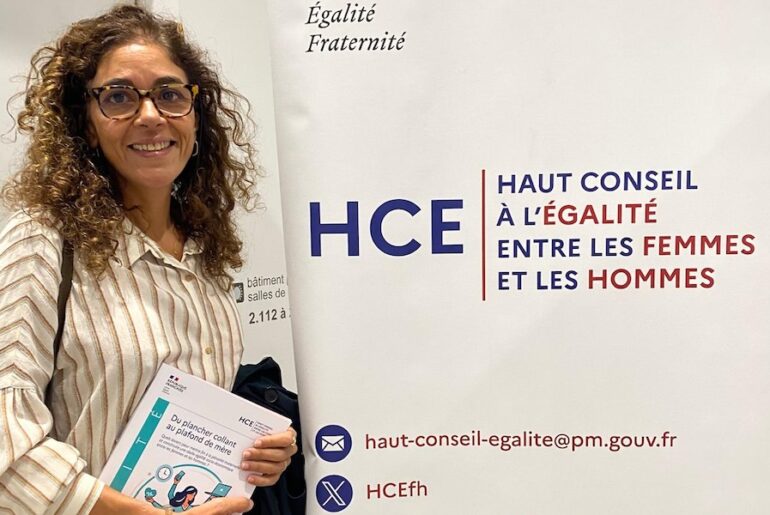
The report published on 9 September by France’s High Council for Equality between Women and Men (HCE), From the Sticky Floor to the Motherhood Ceiling, finally puts precise figures on what mothers have experienced for generations: around the time a child is born, mothers’ earned income falls by around 40%.
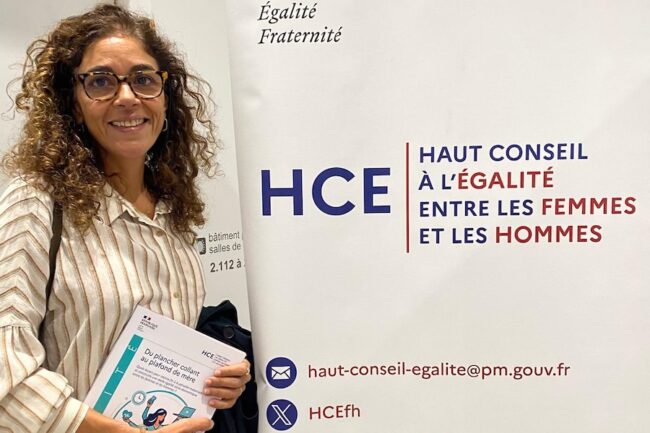
By Afaf Abounouadar, MMM Executive Director
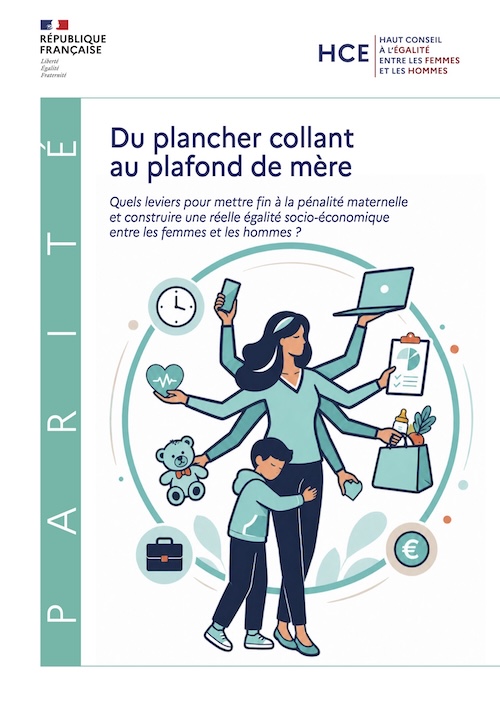
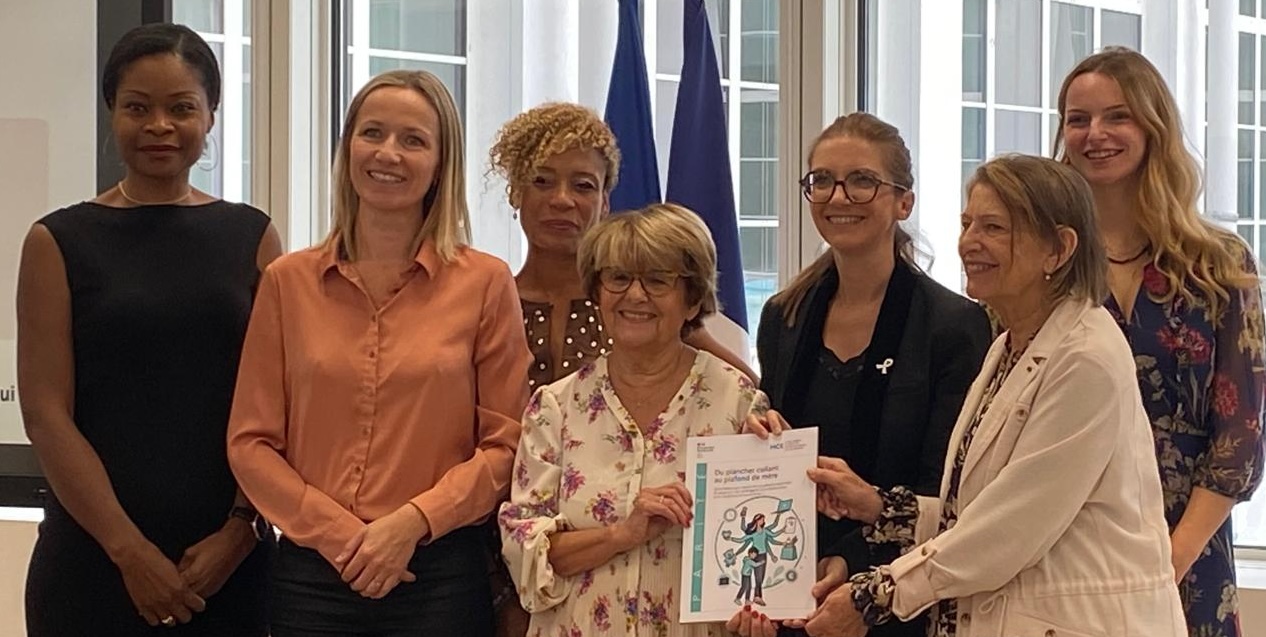
The report is a significant step forward: it makes the economic cost of motherhood visible and measurable – an issue that Make Mothers Matter has been advocating for over many years and to which we have contributed through this work.
The effects of motherhood then continue throughout women’s careers, affecting pay, promotions and career paths, pensions and, in the event of separation, living standards.
This is what we call the “motherhood penalty.”
But above all, the report shows that it does not begin in the workplace. It is built much earlier, in the way our society organises parenthood and, more broadly, care.
When a child is born, thousands of hours of unpaid work become necessary: caring, feeding, educating, accompanying, organising, anticipating, managing appointments, illnesses, childcare, school, activities and the unexpected. This so-called “reproductive” work is what enables children to grow and families and societies to function over time. Yet it continues to be treated as a private matter. And when an activity is considered private, its cost disappears from collective view: it is absorbed by families, and within families, still primarily by mothers.
The HCE figures show this very clearly. In families with young children living with both parents, mothers spend an average of 23 hours a week alone with their children, around four times more than fathers. Among people with parental responsibilities, 63% of women report a high level of mental load, compared with 41% of men.
This time comes at a cost. It translates into involuntary part-time work, career interruptions, reduced professional availability, but also less time to undertake training, develop professional networks, take on responsibilities or simply recover. And the financial cost for mothers is very real when they reach retirement: according to the report, women’s average pension remains 37.5% lower than men’s. There is also a cost to mothers’ mental health, which the report documents extensively.
The root causes lie in social norms and gender stereotypes, and in the belief, transmitted from childhood and long before a couple has a child, that domestic work and raising children naturally fall to mothers.
Part of the answer is immediate, and it starts within the couple: fathers must fully assume their share of domestic and parental work.
But making equality simply a matter of dividing tasks between two individuals would be insufficient and reductive.
Care does not concern parents alone.
It concerns employers, who decide on working hours, flexibility and career paths. It concerns public authorities, which organise parental leave, childcare and social protection. It concerns schools, local authorities, public services and the way we collectively organise time.
Part of the problem also lies in the way we measure what matters.
Domestic and parental work is estimated to represent up to one third of GDP, yet it does not appear in any standard economic indicator. What is not counted is rarely treated as work. This is precisely the value of the report’s proposal to measure an “economic dividend of parental equality”: the gains for employment, businesses, public finances and social cohesion that would result from a lasting reduction in the motherhood penalty. The question is no longer simply how much family policies cost, but how much it costs society as a whole to allow this responsibility to rest solely on mothers.
One of the report’s other key proposals is to make parenthood a collective responsibility, an idea that Make Mothers Matter is already advocating internationally, at the United Nations and within the European Union. We believe this idea needs to be taken to its logical conclusion. Feminist economists have long summed it up in three words – the three Rs: recognise, reduce, redistribute.
Recognising means doing what the report already proposes by putting a figure on this dividend. Reducing means easing the volume of work that families have to absorb, through public services and childcare that are accessible to all and no longer depend on luck or having someone available within one’s circle of family and friends. Redistributing means better sharing the responsibilities and costs of this work between women and men, but also between families, employers and the state.
For years, women have been told to better “reconcile” work and family life. Yet reconciliation has its limits when one side of the equation continues to be organised as though care did not exist. The issue is therefore no longer simply about helping mothers adapt better to the world of work. We must also adapt the world of work and our public policies to the reality of care.
With this report (available only in French) on the “motherhood ceiling”, the HCE finally recognises motherhood as a specific cause of discrimination at the heart of gender inequalities. This ceiling will not disappear through better workplace gender-equality policies alone. It will fall when we stop treating care as a private matter for families and, in practice, for mothers, and instead make it a genuinely shared responsibility between women and men, but also across society as a whole: families, businesses and public authorities must each assume their share.
 Share
Share Share
Share Print
Print Email
Email
Maternal Psychological Wellbeing: A Challenge and a Unique Opportunity
13.01.26
Wednesday 28 January 2026 | 15:15 – 17:30 GMT London School of Economics & Political Science (LSE) – Live broadcast #MaternalWellbeingLSE Maternal mental health is one of the most pressing

Climate Change: A Maternal Physical and Mental Health Emergency
13.11.25
In the lead-up to the UN climate change conference in Belem, Brazil (COP30), MMM was delighted to collaborate with Dr. Saravanan Thangarajan, a Visiting Scientist & Faculty member at Harvard

Democracy on Hold: The Hidden Penalty for Parliamentarians Who Become Mothers
27.11.25
The European Parliament adopted a legislative resolution on the amendment of the European Electoral act, allowing Members to vote in plenary by proxy voting during pregnancy and after giving birth.