Motherhood: the forgotten challenge of equality
02.10.26
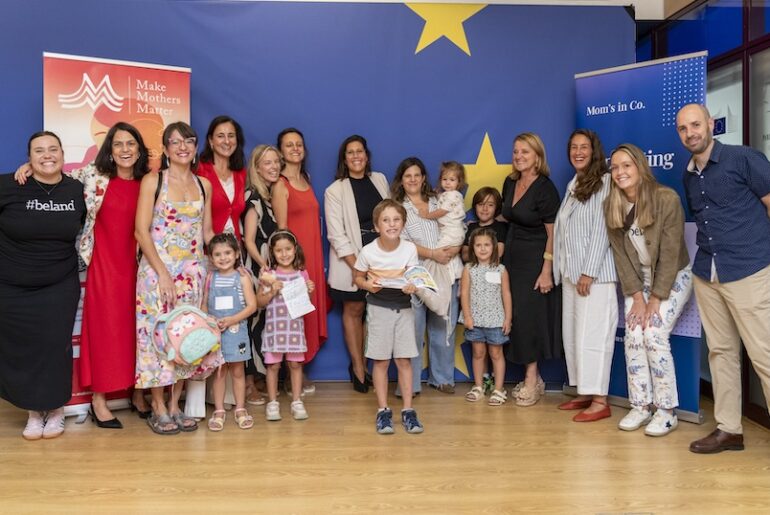
Last Monday, 21 September, a very special event took place in Madrid. For the first time at the European Parliament Office in Spain, we held an event dedicated exclusively to motherhood, entitled Motherhood: the forgotten challenge of equality. The event was co-organised by us, in collaboration with our Network member Mom’s in Co. and the European Parliament Office itself.
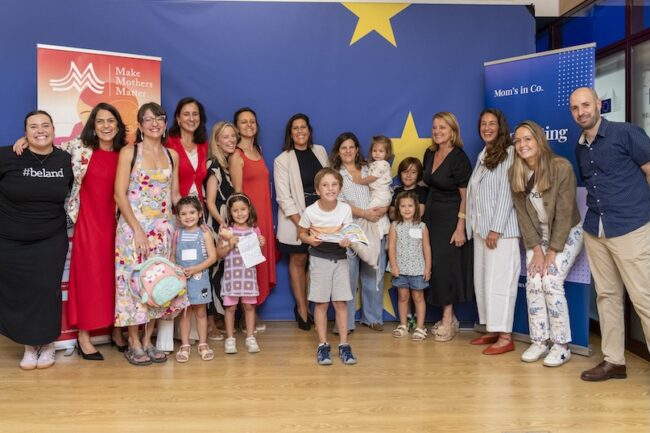
Almost 100 people gathered in the Europa Room with several objectives: to make the reality of motherhood visible, to understand it and its challenges, to talk about care, shared responsibility and, of course, to find solutions to persistent issues facing mothers across the EU.
The event took place following the ‘Conversando con Europa’ meeting, an initiative of the Office’s team in which our Projects Director Angela Garcia, together with representatives of 10 other organisations (including ONCE, Cáritas, Fundación Secretariado Gitano and Red Sanitaria de Integridad y Sostenibilidad, among others), shared a table with Rosa Estaràs, MEP and Vice-Chair of the Committee on Women’s Rights and Gender Equality. During this meeting, the MEP presented this smaller group with the European Parliament’s own-initiative report on care, Advancing towards a caring society: addressing the gender gap in care responsibilities, adopted in May this year. The report sets out the framework for a “European Care Deal” for 2027, which was also discussed during the event.
Putting motherhood at the heart of the equality debate
We began the afternoon with welcoming remarks from Angela and Agustina Palmieri (Mom’s in Co. founder), who made it clear that the aim of the meeting was to take motherhood out of the private and family sphere and address it as a public and political issue. Angela raised something obvious but often overlooked: “Care is not the opposite of work. It is the foundation that allows everything else to function.” As we saw in some of the data from MMM’s State of Motherhood in Europe report, mothers still take on the majority of care responsibilities. But, as Agustina pointed out, “it is not motherhood that creates inequalities, but the way our society is organised around parenthood.” These reflections led to two questions that set the stage for the two panel discussions:
What would a society — and a Europe — that truly took mothers into account look like? What can we change so that becoming a mother does not mean paying a price in terms of health, career or economic independence?
Caring for those who care: mothers’ physical and mental health
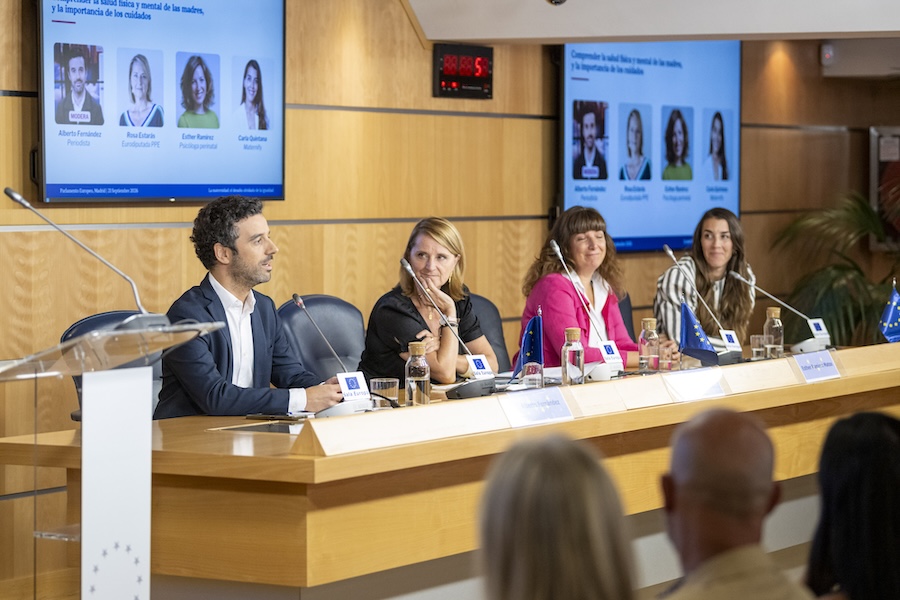
The first panel, Understanding mothers’ physical and mental health, and the importance of care, moderated by journalist Alberto Fernández, began with Rosa Estaràs, who explained the importance of moving towards a society in which care is a right, not a privilege, and presented the report mentioned above:
“We have defined care as a fundamental human right (…) For this to become a reality, it has to be placed at the centre of the agenda, which means at the centre of the budget, which means many structural changes. (…) The more active we are in our sector, men and women, the better our society will be. Not only in terms of human rights. It is an economic investment.”
Esther Ramirez Matos, a perinatal psychologist, spoke about the concept of matrescence, the permanent brain changes that take place in mothers, the skills that develop and the lack of information that still exists about maternal mental health problems. She also proposed concrete solutions:
“We need to put motherhood at the centre of social, economic and health policies. We need to care for those who care.“
“We need longer maternity leave (especially for us). In healthcare, I support the proposal for a healthy postpartum mother check-up, just as we have a healthy baby check-up. Someone should ask us how we are doing. What are you afraid of? What worries you? If we worked as a network, if as a society we had a support network so that mothers did not feel so alone, this would change a lot. I would create more and more spaces for groups of mothers.”
Carla Quintana, midwife and founder of Maternify, shared her international experience as a midwife in the United Kingdom and the practices she found most helpful for mothers. She told us how, after returning to Spain, she began supporting mothers in their homes and how, little by little, this service evolved into Maternify. She also shared her experience as a self-employed professional and entrepreneur.
Breaking the ‘concrete ceiling’: care, couples and women’s careers
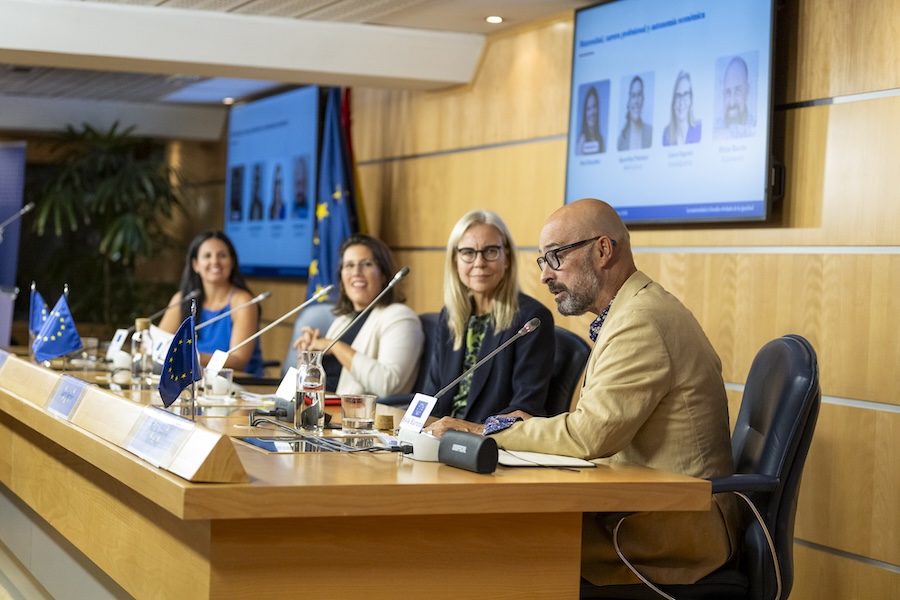
The second panel, moderated this time by journalist Ana González Pinto, gave us the opportunity to hear more data about mothers and couples in Spain from researcher Laura Sagnier. She explained the concept of the ‘concrete ceiling’, referring to care responsibilities that are mainly carried out by women and hold them back in their professional development. She also shared tools that she and her team have developed to help build more equal partnerships, such as the ‘equity balance’, the ‘equity thermometer’ and marriage agreements.
Agustina Palmieri offered the perspective of business and professional careers. She explained that there is no conspiracy to push women out of the labour market, but rather a lack of information and mechanisms to support those who want to become mothers and fathers, so that they do not have to choose between career and family.
“Motherhood is a critical point in women’s careers: half of mothers in Spain change their professional path after having a child. It is not a lack of willingness on the part of companies; it is a blind spot. And identifying it in time is one of the greatest retention opportunities they have today.”
Making care everyone’s responsibility
We closed this panel with reflections from anthropologist and Equimundo Senior Fellow Ritxar Bacete, who shared figures from the State of the World’s Fathers 2026 report and spoke about masculinities.
He explained that men who are able to care experience a greater sense of fulfilment and purpose and are happier, but that many of them — one in six in his study — do not have the time to do so. It is not a lack of willingness to care, but rather the existence of structural barriers, a society that assumes someone will be there to provide care (generally a woman), and a lack of support and conditions to make it possible. As he emphasised:
We need to make care sexy.
We need to come home. To care.
A conversation that goes beyond the stage
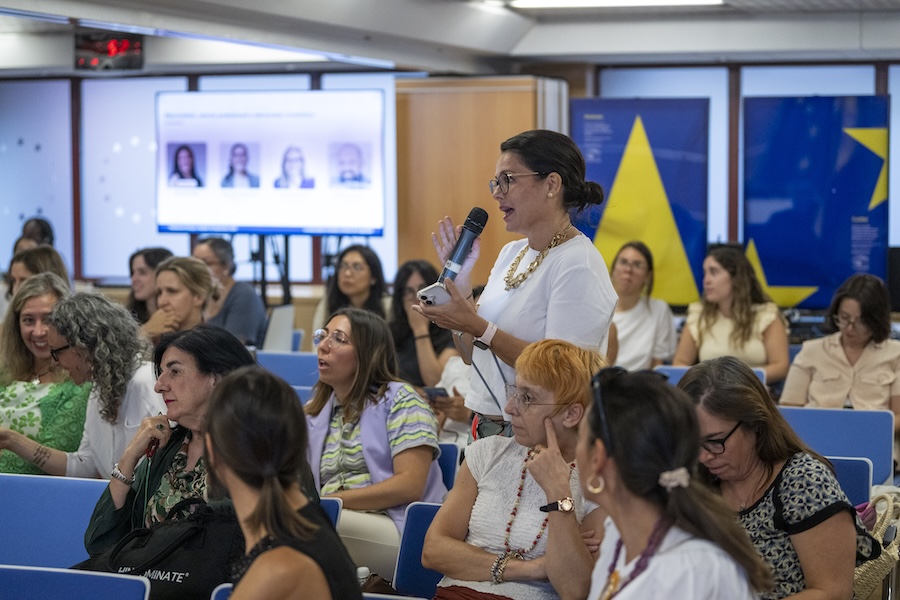
After each panel, the audience also had the opportunity to share their reflections, ask questions and take part in the discussion. These were particularly engaging moments that enriched the conversations and demonstrated the interest that motherhood generates as a social and political issue.
From private experience to public responsibility
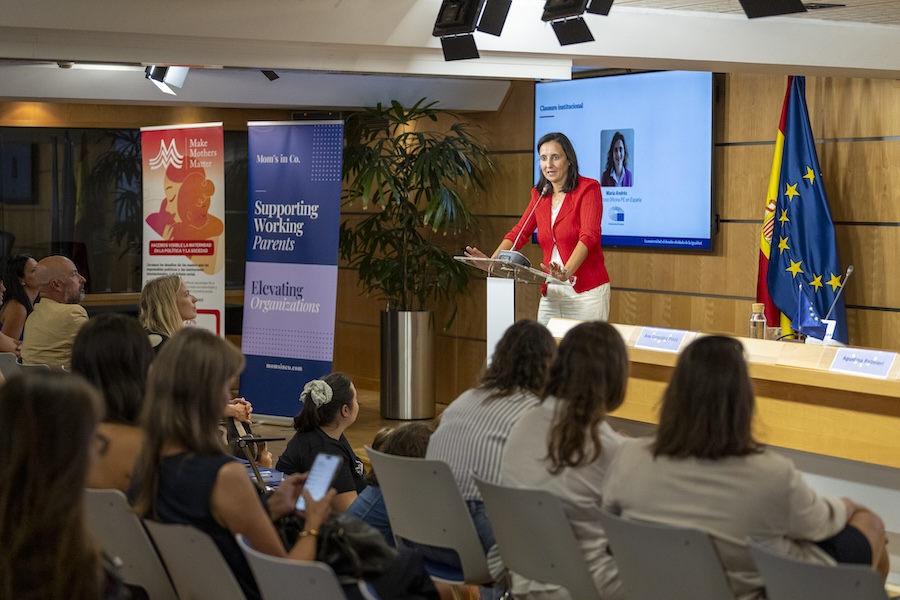
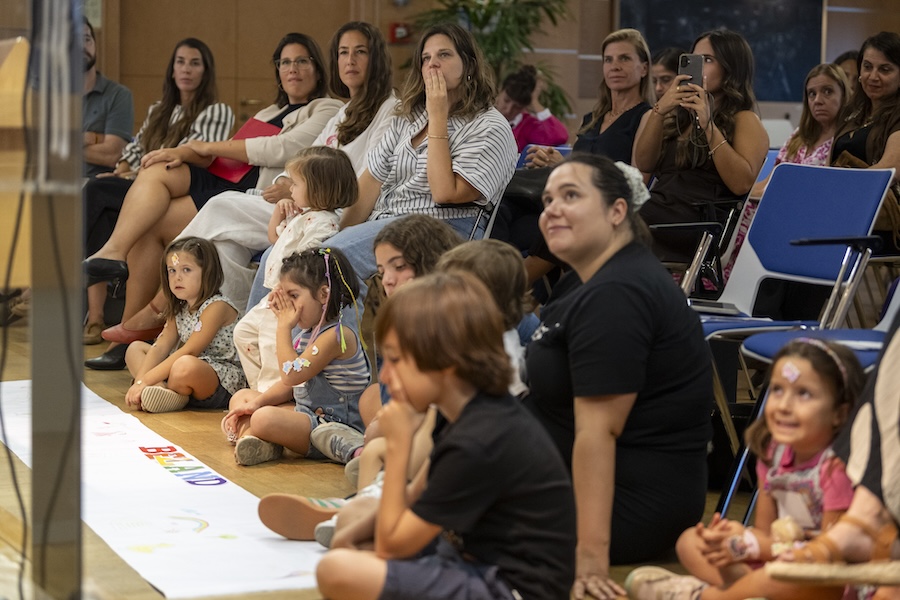
We ended the event with institutional closing remarks from the Director of the Office, Maria Andrés. Participants were joined at the end of the afternoon by the children who had taken part in the free workshop offered by Fundación Alba Torres Carrera and the Beland initiative, making it easier for their mothers and fathers to participate. Maria called for: “A society in which, when someone decides to become a mother or a father, they have all the tools they need to reconcile work and family life.”
She closed by recognising all the women who sustain and share care: “Thank you to so many brave women, who not only sustain care at home, but who support one another in this journey of motherhood.”
We ended the day energised by an idea that ran throughout the entire event: motherhood is not a private matter, but a reality that has a profound impact on our society and on equality between women and men.
Talking about motherhood means talking about care, health, employment, shared responsibility and economic independence. It also means talking about the conditions we need to create so that becoming a mother or father does not mean having to give up other dimensions of our lives.
The event gave us the opportunity to put many questions on the table, but also something even more important: proposals, experiences and people willing to continue working together to find answers.
Because if we want a more equal society, we need a society that cares for those who care. And this requires motherhood, care and shared responsibility to move from the margins to the place they deserve in public debate.
This event was another step forward. And we hope it will also be the beginning of many more conversations, partnerships and changes.
 Share
Share Share
Share Print
Print Email
Email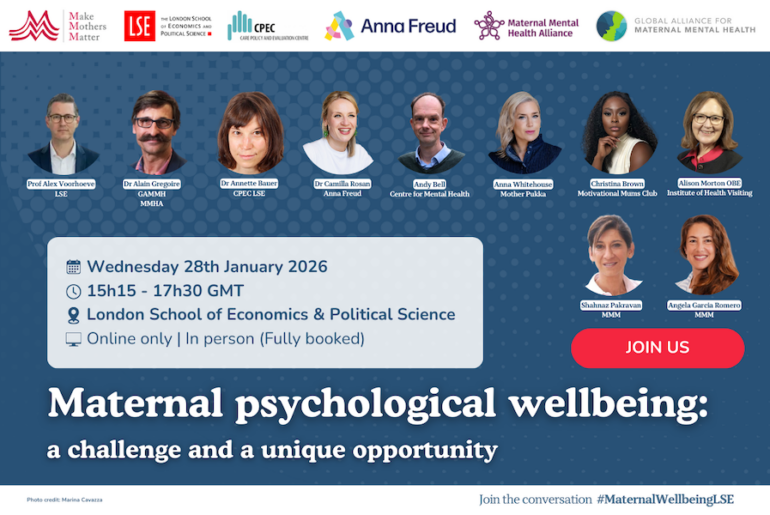
Maternal Psychological Wellbeing: A Challenge and a Unique Opportunity
13.01.26
Wednesday 28 January 2026 | 15:15 – 17:30 GMT London School of Economics & Political Science (LSE) – Live broadcast #MaternalWellbeingLSE Maternal mental health is one of the most pressing

Climate Change: A Maternal Physical and Mental Health Emergency
13.11.25
In the lead-up to the UN climate change conference in Belem, Brazil (COP30), MMM was delighted to collaborate with Dr. Saravanan Thangarajan, a Visiting Scientist & Faculty member at Harvard
Democracy on Hold: The Hidden Penalty for Parliamentarians Who Become Mothers
27.11.25
The European Parliament adopted a legislative resolution on the amendment of the European Electoral act, allowing Members to vote in plenary by proxy voting during pregnancy and after giving birth.