Supporting mothers as caregivers and educators – MMM @ the Human Rights Council
26.03.24
UN Geneva - As the 55th session of the Human Rights council wraps up, here is an overview of our contributions to the discussions that took place on a wide range of topics. Our aim with all our interventions was to stress the educational, social and economic impact of parents - in particular mothers - and the need to better recognise, support and redistribute the underlying unpaid work of caring they do on a daily basis.
Social security: prioritising child rights
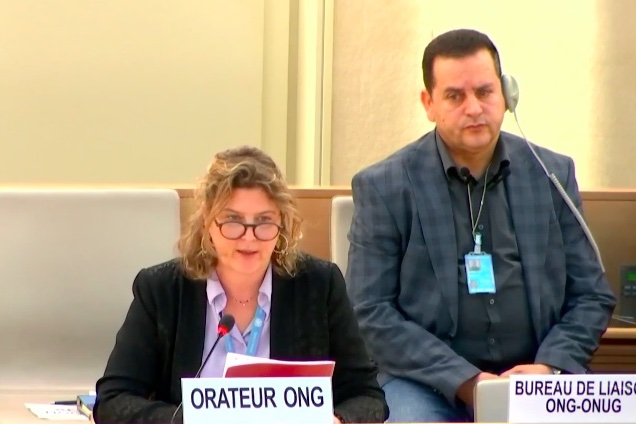
Speaking at the Panel on right to social security on 8 March, MMM called on governments to take a long-term approach with a particular focus on the realisation of child rights when investing in social security and quality public services.
Realising children’s human rights, in particular during early childhood, and ensuring that every child thrives and develops to their full potential, would contribute to building strong and well-educated communities and inclusive and productive societies. In the long term, it would also reduce poverty and inequalities, and drive economic development. This would in turn expand much needed fiscal space to enhance social security and improve public services – thus triggering a virtuous circle.
Realising children’s rights is deeply linked to recognising and supporting the key role of parents and other caregivers, in particular mothers, and the unpaid care work they do.

The role of parents in education – making the case for science
 MMM took the opportunity of the session with the UN Special Rapporteur in the field of cultural rights to stress the role of parents in education – also in relation to access to science, which was the topic of the report under discussion. Education, whether formal, informal or non-formal, is key to access science, and parents have an important role to play, in particular in cultivating scientific curiosity, and in supporting their children throughout their educational journey.
We also reasserted the importance of free quality secondary education for all, especially girls.
Care and support systems: zooming out to take a holistic approach
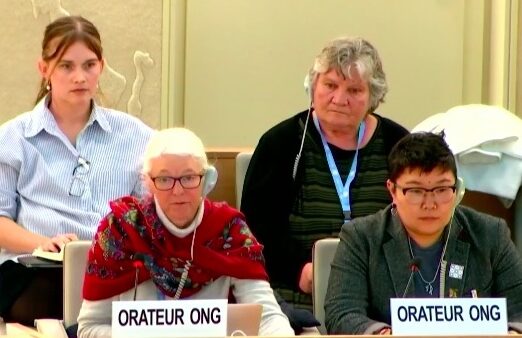 Speaking at the Panel on support systems enabling the inclusion of persons with disabilities on 11 March, MMM called for the recognition, support and inclusion of unpaid caregivers as well – in particular, children with disabilities, where the care and support system typically relies on parents, especially mothers.
Parenting is a rewarding yet tough job. Raising a child with disabilities makes the job even tougher. It can be an isolating, exhausting and overwhelming journey. These parents need extra physical, emotional and financial support. They too need to feel included and appreciated.
We also called for zooming out and taking a holistic and cross-sectoral approach: we called for a paradigm shift and profound transformations to our economic and social systems, to build a care and support system, which is effectively gender-, disability- and age- responsive, and where care, wellbeing and human rights for all are prioritised over financial growth and short-term profits.
Fiscal policy and unpaid care work
During the discussion with the UN Independent Expert on the effects of foreign debt in her report on fiscal policy, MMM welcomed the recognition of other economies, in addition to the formal legally-recognised economy as measured in GDP, in particular the unpaid economy – which includes the unpaid domestic and care work done daily in homes – mostly by women.
We called for recognising unpaid care work as a collective responsibility, and for fiscal policy to support the redistribution of this work and its associated costs across society. Revenue collection and expenditure policies should not only prioritise and serve human rights and the wellbeing of people, but also recognise, redistribute and support the unpaid and underpaid work of Caring – and the people behind it.
As Tim Jackson, an ecological economist, rightly said: “without care we are nothing, our progress is nothing. Without care there is no economy”.
The 55th Session of the Human Rights Council took place from 26 February to 5 April 2024 at the Palais des Nations in Geneva. Mélanie Nédélec and Valerie Bichelmeier represented MMM.
 Share
Share Share
Share Print
Print Email
Email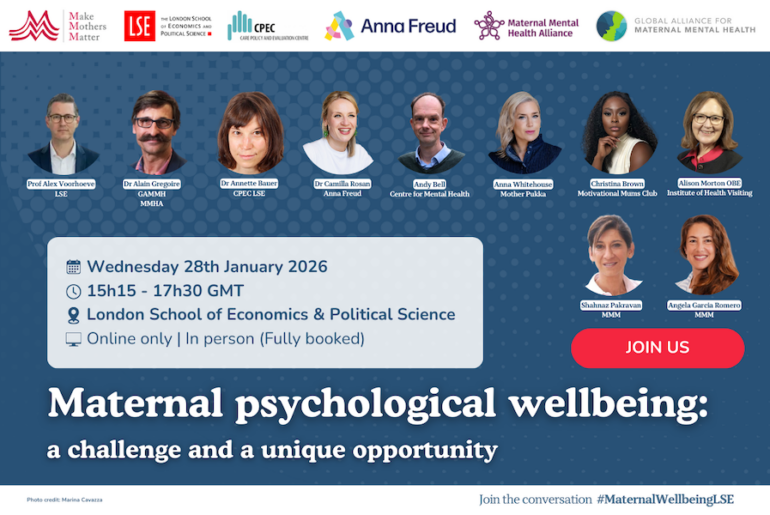
Maternal Psychological Wellbeing: A Challenge and a Unique Opportunity
13.01.26
Wednesday 28 January 2026 | 15:15 – 17:30 GMT London School of Economics & Political Science (LSE) – Live broadcast #MaternalWellbeingLSE Maternal mental health is one of the most pressing

Climate Change: A Maternal Physical and Mental Health Emergency
13.11.25
In the lead-up to the UN climate change conference in Belem, Brazil (COP30), MMM was delighted to collaborate with Dr. Saravanan Thangarajan, a Visiting Scientist & Faculty member at Harvard
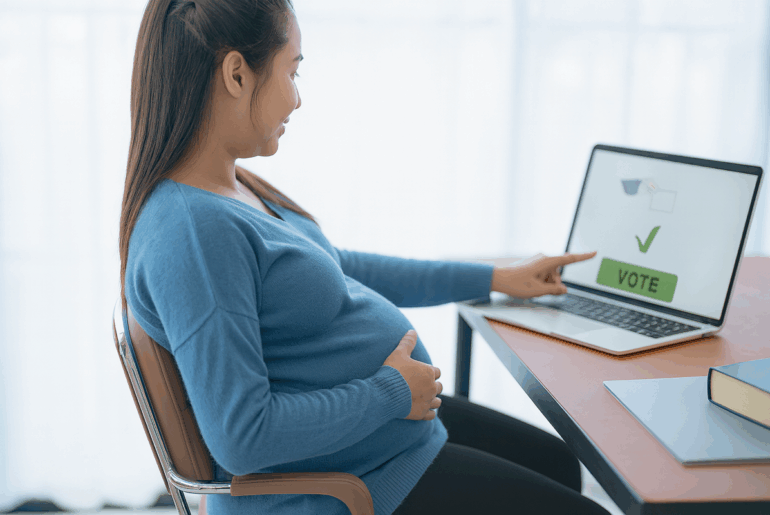
Democracy on Hold: The Hidden Penalty for Parliamentarians Who Become Mothers
27.11.25
The European Parliament adopted a legislative resolution on the amendment of the European Electoral act, allowing Members to vote in plenary by proxy voting during pregnancy and after giving birth.