Motherhood a powerful form of informal learning – Not a gap in the CV
10.02.26
UN New York – On 5 February, we hosted a virtual side-event during the 64th session of the UN Commission for Social Development titled Unlocking the Power of Care: Skills, Equity, and Social Transformation. The event’s key message was powerfully captured by one of the speakers: "Motherhood is not a gap in the CV. It is one of the most powerful forms of informal learning we can experience during our working lives” said Cassandra Menga, MAV Project Coordinator. The discussion explored how unpaid caregiving – particularly parenting – can and should be recognized as valuable work experience that develops transferable skills. It also highlighted why acknowledging unpaid care work, promoting its fairer distribution, and advancing gender equality are essential for inclusive social development. We further brought this issue to the Civil Society Forum of the Commission, reinforcing the need for broader policy recognition and action.
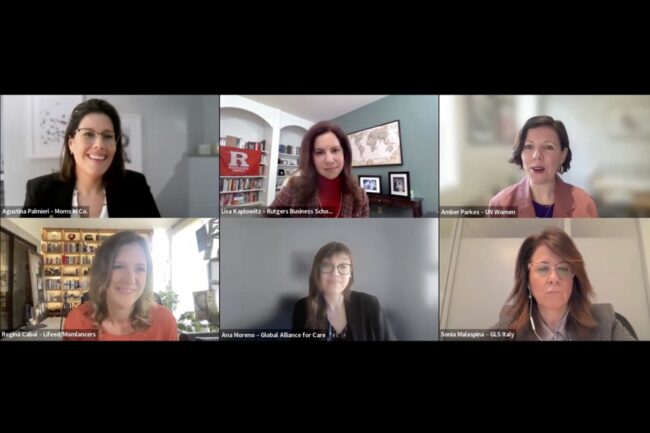

The event provided a comprehensive, evidence-backed exploration of how unpaid care work – predominantly carried out by women – cultivates valuable transferable skills and leadership capacities. It underscored the urgent need to reshape societal and corporate narratives, adopt supportive policies, and implement practical tools that enable caregivers to gain the recognition and opportunities they deserve.
The discussion culminated in a collective call to action: to move beyond the “motherhood penalty” narrative to highlight the “motherhood bonus”—the valuable skills and competencies gained through caregiving; and to integrate care more fully into economic systems and labour market frameworks, thereby contributing to a more equitable, inclusive, and sustainable society.
Key Takeaways
- Unpaid caregiving is skilled work that builds essential leadership and workplace competencies.
- Recognition and valuation of caregiving skills can challenge gender stereotypes, foster men’s involvement in unpaid care work, and promote gender equality.
- Policies that integrate caregiving into employment frameworks benefit businesses, economies, and societies.
- Tools and narratives that empower caregivers to recognise and communicate their skills are critical to change.
- Men’s caregiving involvement must be normalised and supported to redistribute unpaid care work.
- Care work must be integrated into economic metrics and labour policies to reflect its true societal value.
- A multi-stakeholder approach involving individuals, employers, governments, and civil society is essential for systemic change.
Watch the recording
With thanks to our speakers
- Amber Parkes, Care Economy Policy Specialist, UN Women (Moderator)
- Lisa S. Kaplowitz, Associate Professor of Professional Practice in Finance & Economics; and Co-founder and Executive Director, Rutgers Center for Women in Business (CWIB), Rutgers Business School
- Agustina Palmieri, Founder & CEO, Mom’s in Co., Spain, an MMM member organisation
- Cassandra Menga, EU Project Manager & MAV (Mom Virtual Assistant) Coordinator, Italy (video message)
- Regina Cabal, Latin America Ambassador for Lifeed; Founder Momlancers, Mexico
- Sonia Malaspina, Chief People Officer & Corporate Affairs, GLS Italy & President, Winning Women Foundation, Italy
- Ana Moreno, Technical Secretary, Global Alliance for Care (Closing remarks)
We also thank our members who contributed to the discussion through video messages: Aperio (Czechia), Otitsara (Madagascar), Hubi & Vinciane (Benin) & Passion to Share (Kenya).
→ See also the side-event’s invitation article with background information, programme, resources and speakers’ bios
MMM also brings this call for action to the Civil Society Forum of the Commission
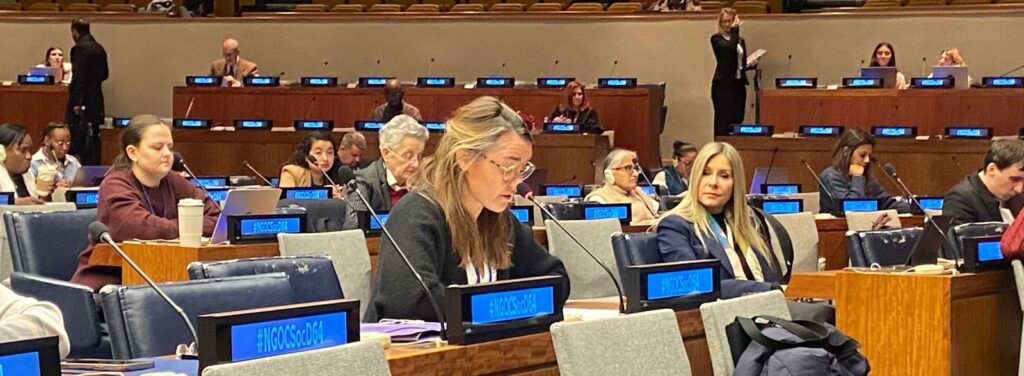
Lorraine Favre, MMM Representative to the UN in New York, was invited to take the floor as part of the Panel discussion on Advancing inclusive pathways to poverty eradication. She reminded that the unequal distribution of unpaid domestic and care work is a cause of economic hardship for women –in particular mothers – and called for recognising care-related skills in order to change the narrative and acknowledge care work as vital, valuable and skilled work that underpins our societies and economy.
Recognising unpaid care work as real, productive and skill-building work is a critical step toward properly valuing this essential contribution, with far-reaching implications for social development.
- For human capital development. Recognising care-related skills strengthens self-confidence, well-being and social participation. It enables training and employment programmes to build on existing competencies rather than assuming a skills deficit.
- For gender equality. Because women perform the majority of unpaid care work, recognising these skills helps challenge the idea that care is “natural” or unskilled women’s work. It supports women’s access to, or re-entry into, the labour market and encourages a more equal sharing of care responsibilities.
- Recognising unpaid care work as productive legitimises public investment in caregivers, including paid family leave, caregiver allowances, pension credits, affordable childcare and eldercare services, and systems to recognise informal skills. Such investments strengthen social infrastructure, reduce poverty and support demographic resilience.
- Care work builds trust, empathy and social cohesion – the foundations of inclusive and sustainable societies – while also supporting economic growth.
→ Watch her intervention on UN WebTV (it starts at about 1:20:00)
 Share
Share Share
Share Print
Print Email
Email
Europe Must Listen to Mothers: Our landmark report heads to the European Parliament
28.08.25
On 22 September 2025, the voices of mothers will take centre stage in Brussels. For the first time, Make Mothers Matter (MMM) will present its State of Motherhood in Europe
Belgian Mothers Face Alarming Rates of Burnout and Perinatal Depression, New EU Survey Finds
03.07.25
Belgian mothers are facing a mental health crisis. According to the State of Motherhood in Europe 2024 survey by Make Mothers Matter (MMM) and Kantar, Belgium reports the highest rates

Parental Mental Health Takes Centre Stage at the French National Assembly
02.04.25
Paris, France – On April 2nd, Make Mothers Matter was honoured to have key findings from its State of Motherhood in Europe 2024 report cited at the French National Assembly