Parental Leave: A Global Imperative for Gender Equity and Economic Prosperity
25.03.16
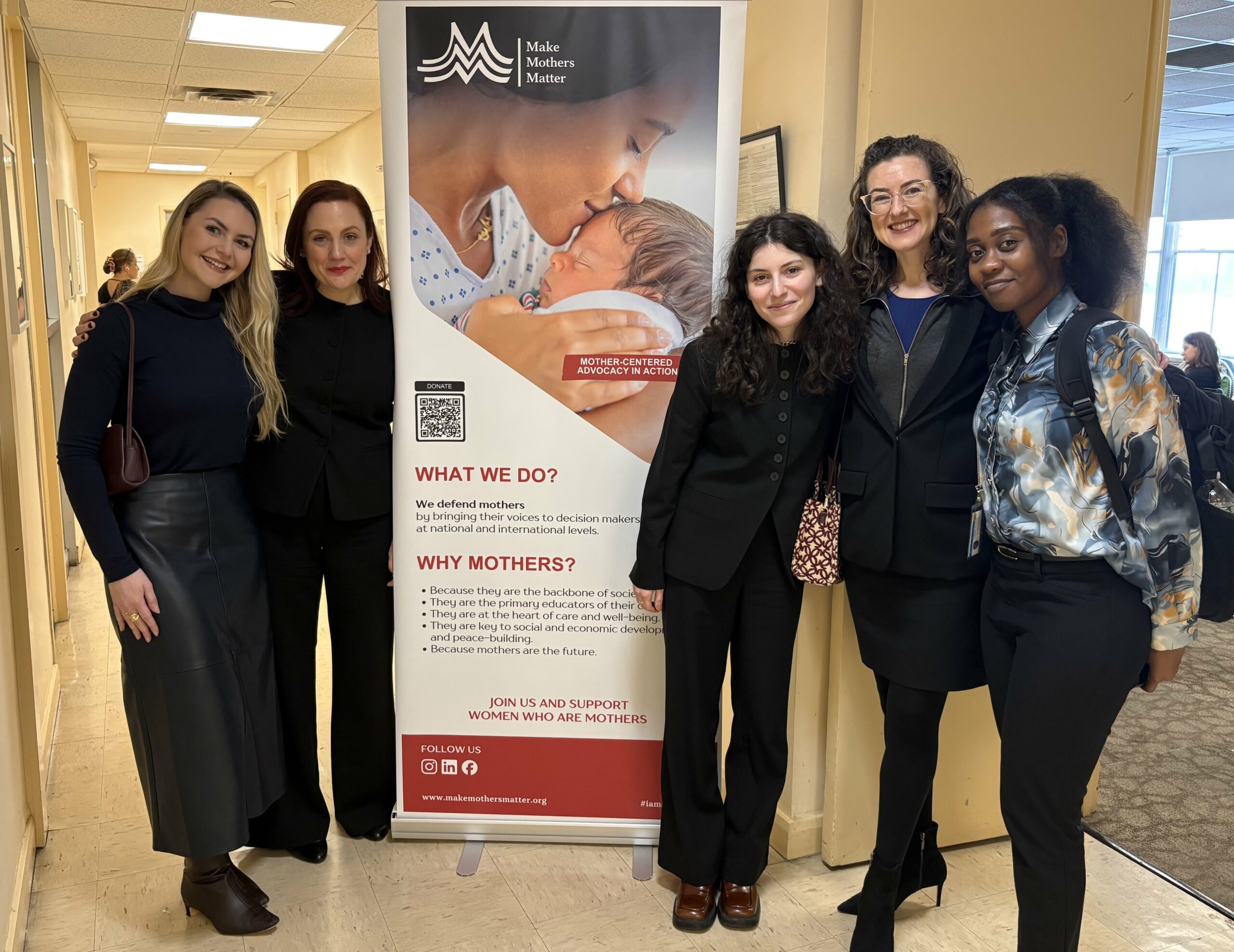
UN New York – At the event MMM organised on the margins of the 70th UN Commission on the Status of Women, experts and policymakers converged to argue that parental leave is far more than a workplace benefit—it is a critical investment in public health, economic stability, and social justice. From New York City’s local initiatives to Uruguay’s national care system, the consensus is clear however: effective policy requires cultural shifts alongside legal reform.
From New York City’s municipal leadership to Uruguay’s national care system, discussions highlighted a clear consensus: effective parental leave policies require not only legal frameworks, but also deep cultural transformation.
 Read the full report of the event
From Policy to Practice
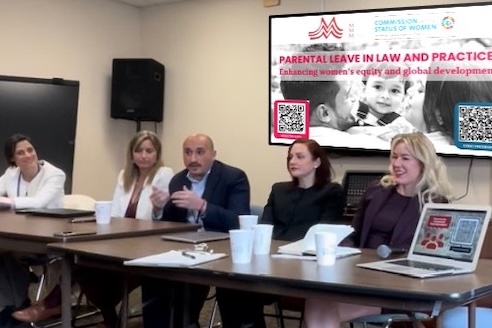
On March 11, 2026, MMM hosted a high-level panel titled “Parental Leave in Law and Practice.” The conversation moved beyond the existence of legislation to examine the lived realities of families worldwide, positioning parental leave as a cornerstone for global development and gender equity.
Opening the session, MMM Board Member Farah Arabe, emphasised that parental leave is a critical legal tool for redistributing care responsibilities more equitably. However, as Commissioner Aissata Camara of New York City underscored, policy alone is not enough. NYC – an early adopter of paid leave for municipal employees in 2016 – demonstrates that governments must lead by example.
As Camara highlighted. three key lessons emerge:
– implementation requires coordinated outreach
– Culture matters as much as legislation
– Equity demands targeted efforts to reach the most vulnerable
“Cities turn commitment into action,” Camara noted, stressing the role of local governance in making policies effective.
A public Health Imperative
Dr. Elizabeth Werner of Columbia University outlined the significant health implications of parental leave policies. She highlighted that untreated perinatal mood and anxiety disorders (PMADs) affect up to 26% of birthing people globally, with an estimated annual economic cost of $14 billion in the United States alone. Paid parental leave has proven to be a powerful mitigating factor – reducing maternal mental health risks, supporting breastfeeding, and improving infant health outcomes. Werner emphasised that such policies are among the rare interventions with multigenerational benefits, strengthening both family well-being and long-term economic stability.
Persistent Global Gaps
Despite clear evidence of benefits, major disparities persist worldwide. Julia Braunmiller of the World Bank presented findings from the 2026 Women, Business and the Law report, revealing that no country has yet achieved full legal equality between women and men. While 123 countries meet International Labour Organisation standards for maternity leave, only 62 offer paid paternity leave. This imbalance reinforces unequal caregiving roles and limits women’s participation in the workforce. Evidence shows that aligning parental leave policies between mothers and fathers directly contributes to higher female labour force participation.
The Culture Barrier
Legal reforms alone are insufficient without addressing entrenched social norms. Jose Campi Portaluppi of Equimundo described the “manbox” – rigid expectations of masculinity that discourage men from taking parental leave due to stigma. Shifting these norms requires both cultural and narrative change, including greater recognition of men’s role as caregivers.
Sarah Steinberg of LinkedIn reinforced this point, noting that on LinkedIn women are 30% more likely than men to report Career breaks for caregiving, contributing to long-term earnings gaps and underrepresentation in leadership.
Towards Integrated Care Systems
Closing the panel, Valentina Perrotta of Uruguay’s Ministry of Social Development emphasised the importance of embedding parental leave within comprehensive national care systems. Uruguay’s approach – treating care as a public good – offers a model for integrating policy, services, and cultural change.
A Call to Action
The discussion made one point unequivocally clear: supporting parents is not a societal cost – it is a foundational investment in the future workforce and in sustainable development.
Achieving true equity will require coordinated action across sectors to:
- Expand access to parental leave, including for informal worker
- Ensure adequate compensation
- Address persistent cultural stigmas
Only through this holistic approach can parental leave fulfill its transformative potential.
With thanks to our speakers
- Elizabeth Werner, Associate Director, Center for the Transition to Parenthood at Columbia University
- Julia Braunmiller, Women, Business and the Law Initiative at the World Bank
- Jose Campi Portaluppi, Head of Advocacy of Equimundo
- Sarah Steinberg, Global Public Policy Partnerships at LinkedIn
- Valentina Perrotta, Ph.D., Adjunct Director of the National Secretariat for Care, Ministry of Social Development of Uruguay
- Aissata Camara, Commissioner of the Office of International Affairs, City of New York
- Farah Arabe, UN Representative and Member of the Board of Directors, Make Mothers Matter & Founder, itotheN | Intergenerational Impact (Moderator)
→ See also:
- Event’s program and Speakers’ bios
- Presentations by Dr. Elizabeth Werner (Columbia University) and Julia Braunmiller (World Bank)
- Invitation article for additional background
 Share
Share Share
Share Print
Print Email
Email
Europe Must Listen to Mothers: Our landmark report heads to the European Parliament
28.08.25
On 22 September 2025, the voices of mothers will take centre stage in Brussels. For the first time, Make Mothers Matter (MMM) will present its State of Motherhood in Europe

Belgian Mothers Face Alarming Rates of Burnout and Perinatal Depression, New EU Survey Finds
03.07.25
Belgian mothers are facing a mental health crisis. According to the State of Motherhood in Europe 2024 survey by Make Mothers Matter (MMM) and Kantar, Belgium reports the highest rates

Parental Mental Health Takes Centre Stage at the French National Assembly
02.04.25
Paris, France – On April 2nd, Make Mothers Matter was honoured to have key findings from its State of Motherhood in Europe 2024 report cited at the French National Assembly