Recognising Care
The Relevance of Parenting Skills in the EU Skill Portability Initiative
16.03.26

Make Mothers Matter (MMM) responded to the Public Consultation on the European Commission’s upcoming Skill Portability Initiative. We submitted a paper outlining our views and provided feedback on the need to recognise the ‘soft skills’ acquired through caregiving and their transferability to the labour market.
Across Europe, millions of parents – particularly mothers – develop complex and highly transferable competencies through caregiving. Yet these skills remain largely invisible within labour market systems and professional qualification frameworks. As the European Commission develops the EU Skill Portability Initiative, this consultation represents a critical opportunity to address this gap.
MMM is advocating for the EU and its Member States to adopt frameworks that integrate care-related skills and competences – which remain largely invisible and under recognised – into formal validation practices, guidance systems, micro-credential frameworks, and career progression pathways. This would ensure that parenting-related skills can be identified, assessed and translated into recognised qualifications or partial certifications.
Our paper provides background information on the motherhood penalty, reviews previous and ongoing EU-wide initiatives and frameworks, and outlines how these changes could be implemented across Europe.
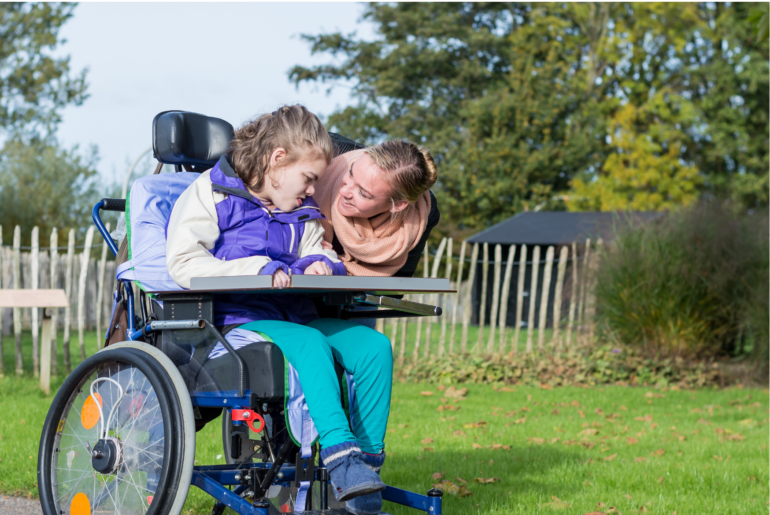
Parents – particularly mothers – in the workforce face a unique set of challenges. Whether returning to work after maternity leave or balancing ongoing caregiving responsibilities, mothers are often under-recognised and insufficiently supported. These findings are reflected in our 2024 State of Motherhood Survey. At the same time, the labour market frequently overlooks an important reality: during periods of caregiving, parents are continuously developing valuable and transferable skills.
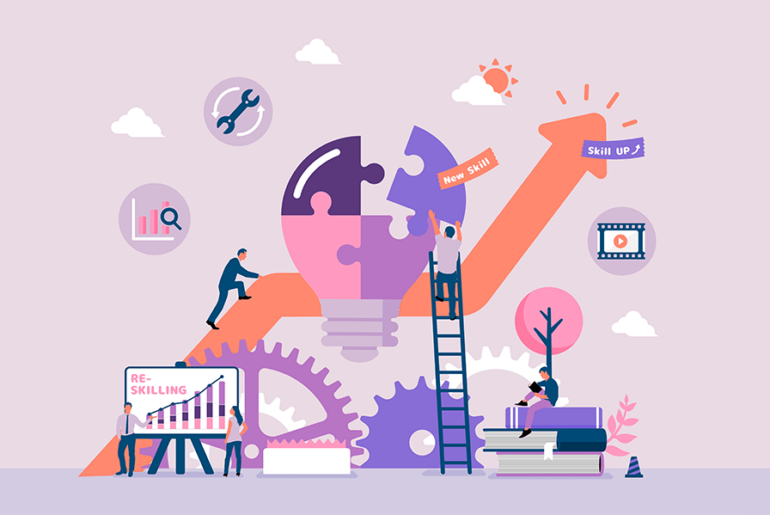
Parenting requires a wide range of competencies including organisation, crisis management, negotiation, communication, emotional intelligence, stress management, and complex multitasking. These capabilities are increasingly essential in modern workplaces, where adaptability, collaboration, and leadership skills are highly valued. Yet because these skills are acquired through informal learning contexts such as caregiving, they are rarely documented or recognised in formal validation systems. This represents a missed opportunity for individuals, employers, and the European economy. These skills have significant potential for application in the workforce through upskilling and reskilling frameworks and should be better supported to ensure equal opportunity and stronger labour market participation.
 The European Union has already acknowledged that valuable skills are often developed outside formal education systems. The 2012 Council Recommendation on the validation of non-formal and informal learning encourages Member States to recognise competences gained through life experiences, including activities at home. Similarly, the European Skills Agenda and the Union of Skills initiative emphasise lifelong learning and the importance of broadening how skills are defined and valued. The Union of Skills recognises that competences extend well beyond those acquired through formal education or traditional employment pathways. Despite these commitments, informal caregiving – particularly parenting – remains insufficiently operationalised in practice. While activities such as volunteering are widely recognised within validation frameworks like Europass, caregiving skills are rarely translated into recognised credentials or qualifications.
Evidence from emerging initiatives demonstrates that translating parenting experience into measurable professional competencies can benefit both employers and employees. Programmes such as Lifeed, the EU-funded MAV project, and the MothersCan project show that recognising caregiving-related skills can improve employee engagement, productivity, and workforce retention. These initiatives demonstrate how motherhood can be reframed not as a disruption to professional development, but as a period of significant skill acquisition.
Make Mothers Matter (MMM) welcomes the Commission’s ambition to improve the recognition and portability of skills across the European Union. However, for this initiative to fully unlock Europe’s human capital, it must explicitly recognise and validate the skills acquired through caregiving and parenting through formal validation practices, guidance systems, micro-credential frameworks, and career progression pathways. These competencies are real, valuable, and transferable. Failing to acknowledge them not only reinforces gender inequalities but also leaves a significant pool of talent underutilised in Europe’s workforce.
 Share
Share Share
Share Print
Print Email
Email
Europe Must Listen to Mothers: Our landmark report heads to the European Parliament
28.08.25
On 22 September 2025, the voices of mothers will take centre stage in Brussels. For the first time, Make Mothers Matter (MMM) will present its State of Motherhood in Europe
Belgian Mothers Face Alarming Rates of Burnout and Perinatal Depression, New EU Survey Finds
03.07.25
Belgian mothers are facing a mental health crisis. According to the State of Motherhood in Europe 2024 survey by Make Mothers Matter (MMM) and Kantar, Belgium reports the highest rates
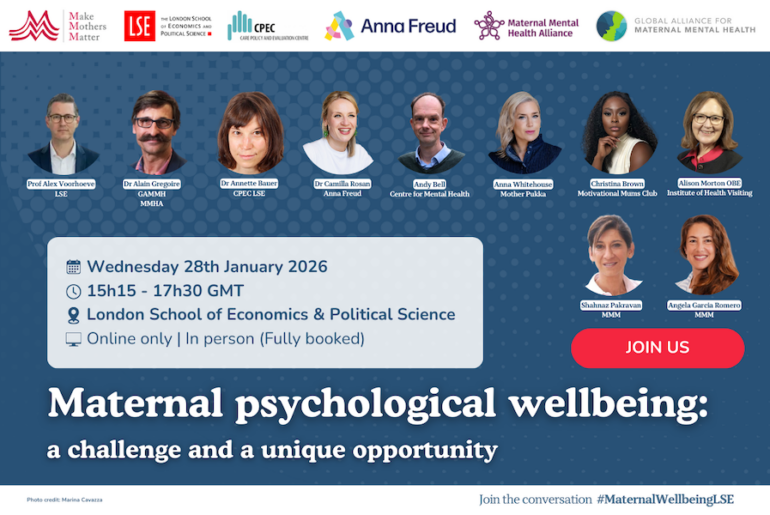
Maternal Psychological Wellbeing: A Challenge and a Unique Opportunity
13.01.26
Wednesday 28 January 2026 | 15:15 – 17:30 GMT London School of Economics & Political Science (LSE) – Live broadcast #MaternalWellbeingLSE Maternal mental health is one of the most pressing