Transforming Maternal Healthcare for Mothers with Disabilities
ASSIST Project National Information Day – Belgium
03.03.26
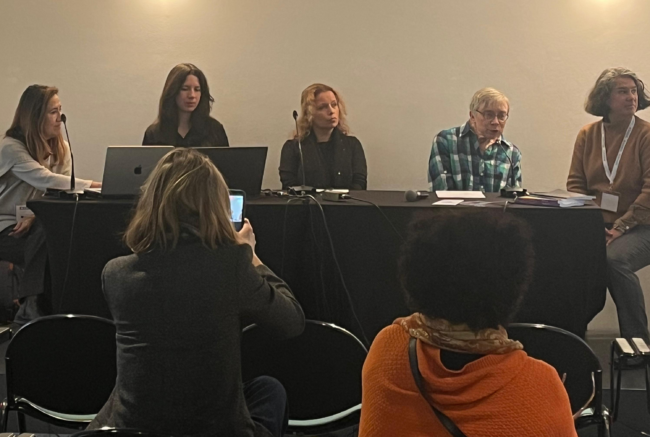
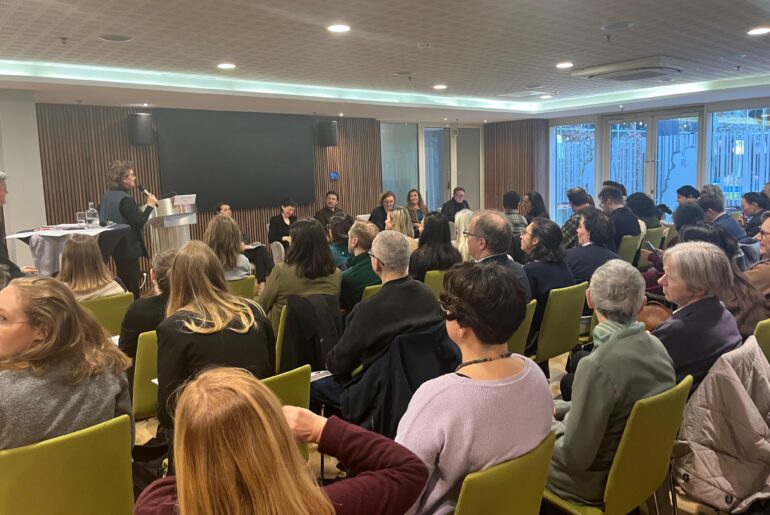
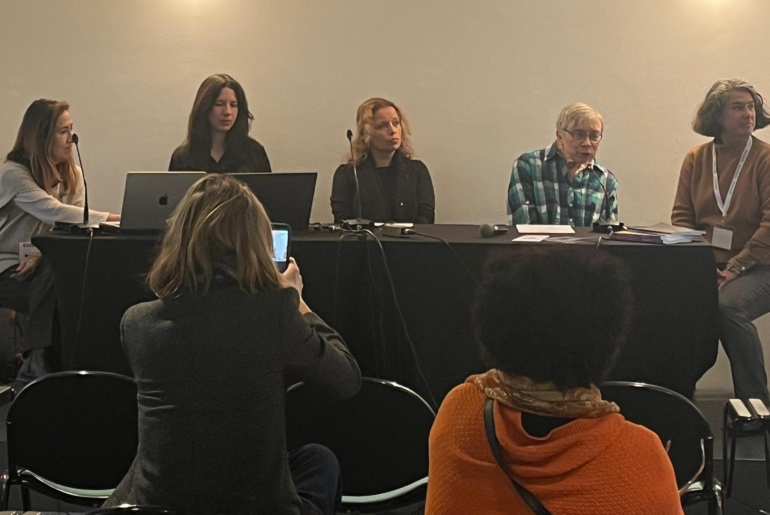
Make Mothers Matter organised an information event within the framework of the EU funded project Assist, dedicated to improving access, quality, and inclusivity of maternal healthcare for women with disabilities across Europe.
The event shone a light on an often invisible issue: the exclusion of mothers with disabilities from equitable maternal healthcare.
Voices from the day
Ann Van den Buys, president and co-founder of NGO Persephone, opened the day by reflecting on 30 years of advocacy for women with disabilities. As a person with disability herself, her message was clear: women with disabilities are still too often seen as incapable — of working, of parenting, of leading full lives. Persephone exists to challenge that. Led by and for women with disabilities, the organisation champions motherhood, safety, and full citizenship. Persephone works to move “from stereotypes to full citizenship,” promoting a positive and empowered image of women with disabilities. Persephone places special emphasis on motherhood and resilience, and demonstrates that women with disabilities can and do play full roles in society. Their motto says it all: “We are not to be underestimated.”
Deborah Everaerts, a proud mom of 2 children, a clinical psychologist and a board member of the NGO Anna Timmerman, supporting deaf blind people, shared her personal story. Diagnosed with Usher syndrome in 2020 — a condition causing progressive loss of both hearing and sight — she lost her job weeks after maternity leave and repeatedly found herself spoken over in medical settings. Yet she also found strength: in her family, her care team, and her two children, who see her simply as their mum. Her message to healthcare professionals: “Stop, listen, ask what helps — and share it with your team. Not every disability is visible, and not every patient has the energy left to keep speaking up.”
BAPMH (Belgian Alliance for Perinatal Mental Health) presented a 10-point manifesto calling for better perinatal mental healthcare, including universal access, routine screening, expanded capacity, and a fundamental debate on protection and autonomy for mothers with mental disabilities.
From Evidence to Action in Belgium
Despite Belgium’s ratification of the UN Convention on the Rights of Persons with Disabilities, mothers with disabilities continue to face systemic discrimination throughout pregnancy,  childbirth, and postnatal care. Evidence from the ASSIST Project shows that the barriers faced by mothers with disabilities are not primarily medical, but structural, legal, and attitudinal. In Belgium, discrimination during pregnancy, childbirth, and postnatal care stems not from disability itself, but from systemic shortcomings in policy, infrastructure, and professional training.
Key shortcomings include the absence of maternity-specific provisions in disability policy, non-binding accessibility standards, fragmented governance across regions, inaccessible facilities, insufficient disability training for healthcare professionals, threats to reproductive autonomy, limited adapted mental health support, and a lack of coordinated postnatal care. Discrimination is further obscured by the absence of systematic data collection. Women facing intersecting vulnerabilities — including migrant, rural, or minority backgrounds — experience compounded exclusion. Policies lack enforceable maternity-specific standards. Only 17% of facilities have adjustable examination tables. 92% of mothers report being spoken to through their companion rather than directly. Reproductive choices are questioned or overridden. Mental health support is inadequate. And once discharged, mothers are left without coordinated care or practical support.
In response, the ASSIST Project is developing an evidence-based curriculum, digital training simulations, and policy blueprints to support structural reform across Europe. It proposes concrete measures: making maternity accessibility standards legally binding; ensuring universal design in facilities; integrating mandatory disability competency training into medical education; safeguarding reproductive autonomy; expanding adapted perinatal mental health services; establishing coordinated postnatal care pathways; systematically collecting disability-disaggregated data; and harmonising standards across regions.
We at MMM are calling for closing the continuing gap between legal commitments and lived reality. This requires coordinated, accountable implementation at all levels of governance.
 Share
Share Share
Share Print
Print Email
Email
Europe Must Listen to Mothers: Our landmark report heads to the European Parliament
28.08.25
On 22 September 2025, the voices of mothers will take centre stage in Brussels. For the first time, Make Mothers Matter (MMM) will present its State of Motherhood in Europe

Belgian Mothers Face Alarming Rates of Burnout and Perinatal Depression, New EU Survey Finds
03.07.25
Belgian mothers are facing a mental health crisis. According to the State of Motherhood in Europe 2024 survey by Make Mothers Matter (MMM) and Kantar, Belgium reports the highest rates
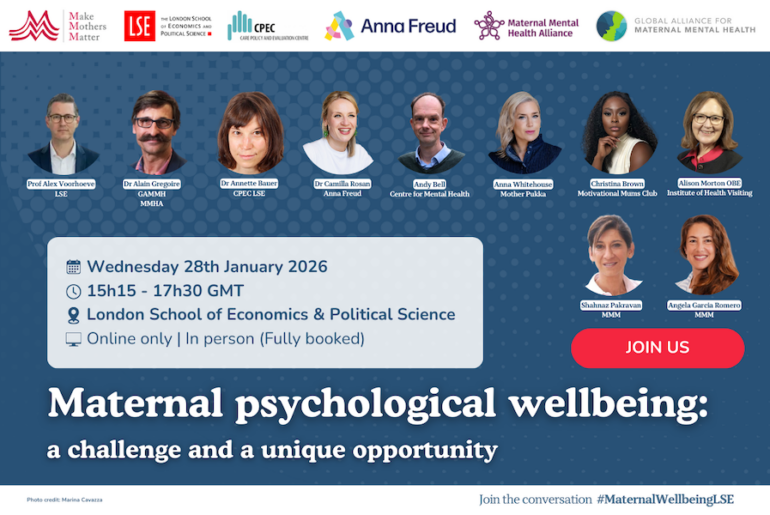
Maternal Psychological Wellbeing: A Challenge and a Unique Opportunity
13.01.26
Wednesday 28 January 2026 | 15:15 – 17:30 GMT London School of Economics & Political Science (LSE) – Live broadcast #MaternalWellbeingLSE Maternal mental health is one of the most pressing