Parental leave: Care shouldn’t cost mothers their future
MMM brings mothers’ perspectives to the EIGE Gender Equality Index 2026 discussion.
19.11.26
Parental leave is a cornerstone of gender equality. But when it is poorly paid, difficult to access or not shared between parents, it can deepen the very inequalities it is meant to address. Mothers pay the price in lost income, slower career progression and poorer health.
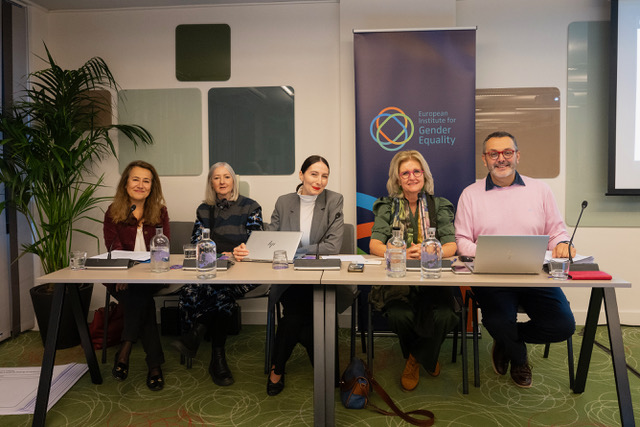
This was the central message MMM brought to a press briefing ahead of the release of the EIGE Gender Equality Index 2026, which this year focuses on parental leave. Drawing on EIGE’s findings and our own survey of mothers across Europe, we highlighted why leave policies must work for families in practice, not just on paper.
What the evidence shows
EIGE’s findings are clear: well-paid, accessible and shared parental leave advances gender equality. Poorly paid or inaccessible leave, by contrast, reinforces the inequalities it is meant to address.
The cost falls on mothers: women earn about 80% of men’s annual earnings, and the gender pension gap stands at 24%. In Germany, women’s poverty risk peaks one year after childbirth and can stay elevated for up to five years, while men’s finances barely change.
Design makes a measurable difference. In Sweden, every month of leave taken by fathers raises mothers’ earnings by 6.7%. Fathers take leave when it is paid at or near their previous earnings, and non-transferable months drive uptake, above all when combined with good pay. Access is also uneven: about 1 in 10 working parents are not eligible for leave, mostly the self-employed and platform and other non-standard workers.
What mothers told us
Behind these structural inequalities are real consequences for mothers’ everyday lives. MMM’s own survey shows just how significant the toll can be.
Our MMM survey puts numbers on what this means in daily life:
- 50% of mothers report a mental health condition, such as depression, anxiety, burnout or peripartum depression.
- 67% of mothers report feeling overloaded.
A choice is only genuine if it carries no hidden penalty
Mothers should not have to choose between their careers and their children. They want to remain in the labour market while being present for their families, with the freedom to adjust that balance as their children’s needs and their own career circumstances evolve. The recent UN recognition of maternity as a ground of discrimination confirms that motherhood is not a private matter but a structural inequality.

MMM called for leave that is:
- Well paid and partly non-transferable. Leave families can’t afford isn’t a right, it’s a privilege.
- Backed by meaningful paternity leave. The EU Directive sets only a floor of 10 days. Ten days is not support, it’s a gesture. Longer paternity leave also supports children’s and fathers’ health and early bonding.
- Flexible, pension-neutral and career-protected. Leave should count fully towards pensions, and parents should return to an equivalent role.
- Publicly funded, so that hiring women is never seen as a risk.
The test of any leave policy is simple: does a parent who cared end up as well off as one who didn’t?
The leave ends, but the care doesn’t
Even the best parental leave policy cannot deliver equality if families are left without affordable childcare when leave ends. In most Member States a gap remains between the end of well-paid leave and access to a guaranteed, affordable childcare place. Mothers are often the ones who bridge that gap, through unpaid leave or by leaving employment altogether. Only a handful of countries have closed it.
MMM therefore urged decision-makers to recognise care as a public good and take action to:
- Close the gap between leave and childcare and meet the Barcelona targets.
- Guarantee a right to flexible work, not just a right to request it.
- Introduce care credits in pension systems in every Member State, for women and men.
- Change workplace culture alongside the law. Laws open the door, but workplace culture decides who walks through it.
Care must count – for everyone
Parental leave should be a moment of support and shared responsibility, not the start of a financial or professional penalty for mothers.
At MMM, we believe, gender equality cannot be achieved while the economic and health costs of raising the next generation continue to fall disproportionately on women. This requires more than leave entitlements: it means affordable childcare, secure careers, fair pensions and a genuine shift towards sharing care between women and men.
Caring for children is not a private cost that mothers should bear alone. It is a shared responsibility – and public policy must finally reflect that.
 Share
 Share
 Print
 Email

Maternal Psychological Wellbeing: A Challenge and a Unique Opportunity
13.01.26
Wednesday 28 January 2026 | 15:15 – 17:30 GMT London School of Economics & Political Science (LSE) – Live broadcast #MaternalWellbeingLSE Maternal mental health is one of the most pressing
Unlocking the Power of Care: Skills, Equity, and Social Transformation
09.01.26
UN New York – Join us online on 5th February for an official side-event to the 64th UN Commission for Social Development, which will focus on how harnessing the skills
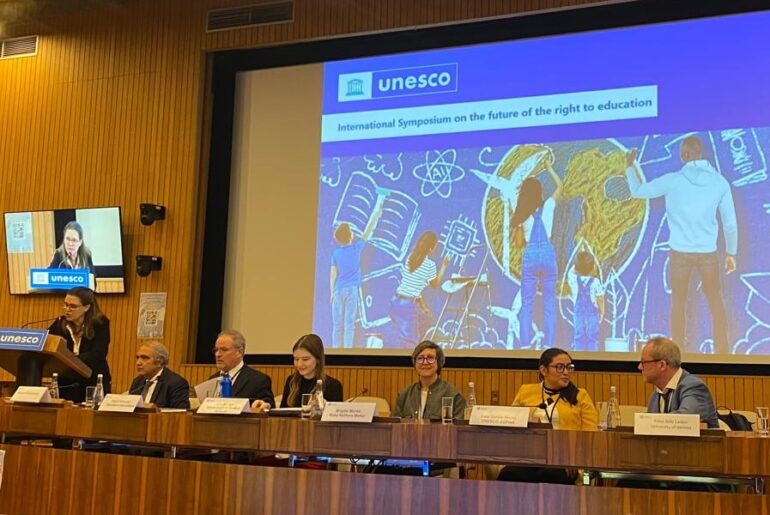
The Future of the Right to Education: Make Mothers Matter at UNESCO to Bring Parents’ Voices Forward
15.12.25
UNESCO, Paris – On the occasion of the 65th anniversary of the 1960 Convention against Discrimination in Education, UNESCO brought together the global community at an International Symposium on the