Reclaiming Time: MMM at Sloworking Day 2026
07.04.26
By Angela Garcia Romero, project Director, Make Mothers Matter
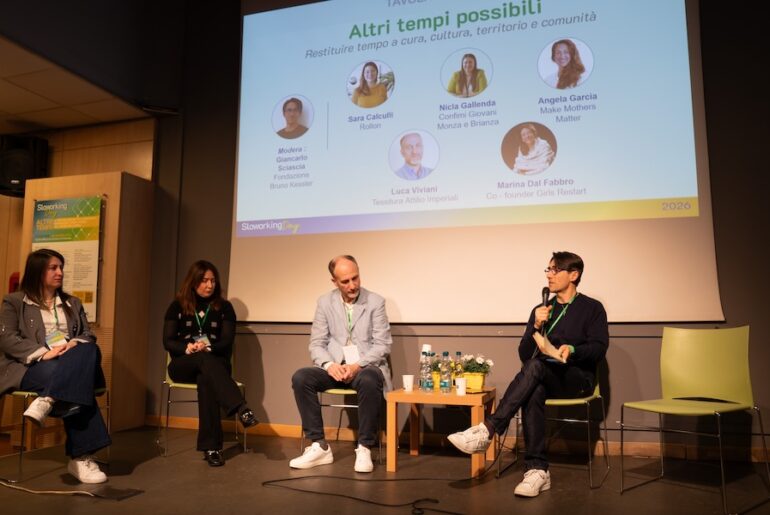
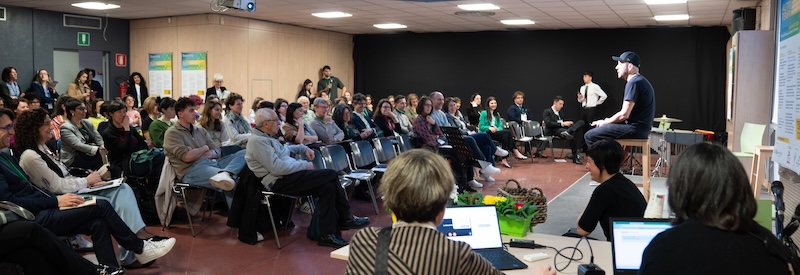
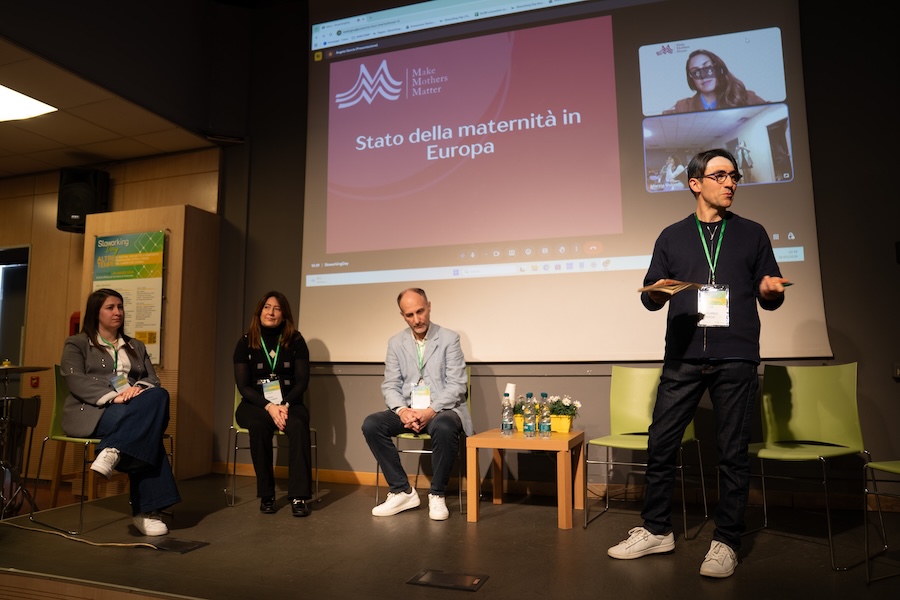
At the second edition of Sloworking Day in Vimercate, Italy, I had the opportunity to present MMM’s work in a context where the “right to time” was at the heart of discussions on the future of work, wellbeing, and social sustainability. Bringing together researchers, businesses, and civil society, the event clearly showed that time—far from being a purely personal matter—is a critical social and political issue.
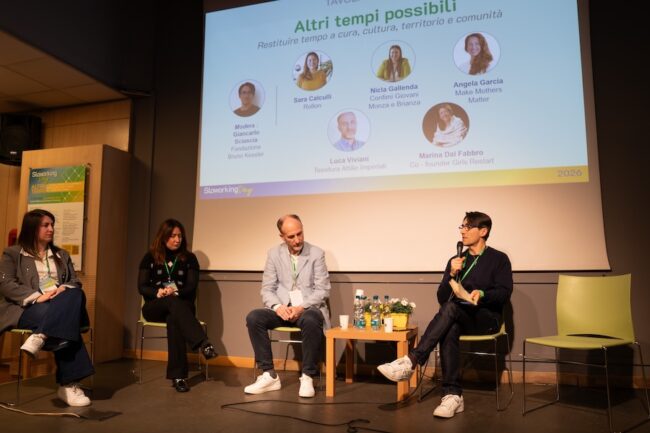
As part of the roundtable “Altri TEMPI possibili”, I presented key data highlighting one of the structural drivers of time inequality: the unequal distribution of care and mental load. The evidence is clear—women, and particularly mothers, continue to bear a disproportionate share of unpaid work. This has far-reaching consequences, limiting their access to paid employment, reducing their participation in public life, and affecting their overall wellbeing.
These findings point to the urgent need for stronger social infrastructures—such as accessible childcare, more supportive workplace policies, and meaningful cultural change—to ensure a fairer redistribution of care responsibilities. Without such systemic action, the “right to time” will remain out of reach for many women, with significant implications for mental health, gender equality, and social cohesion.
MMM’s contribution reinforces a key message that emerged from the event: restoring time for care, relationships, and participation is not a cost, but a necessary investment in building healthier, more inclusive, and more sustainable societies.
👉 The slides of MMM’s presentation (in Italian) are available here
 Share
Share Share
Share Print
Print Email
Email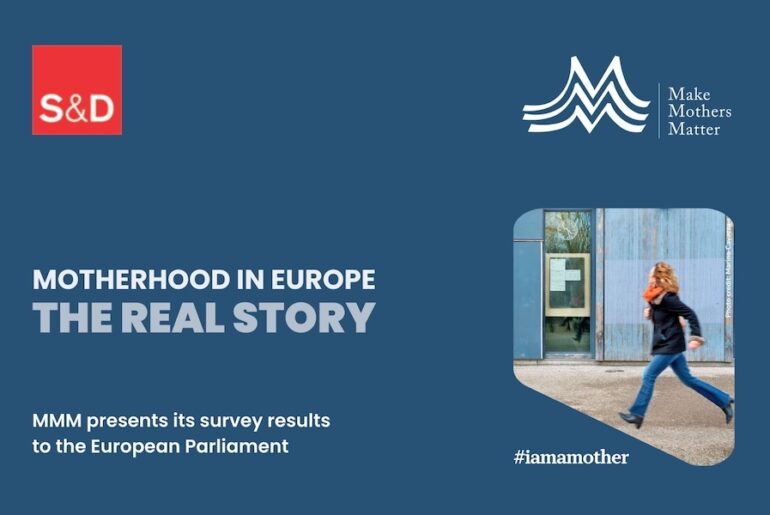
Europe Must Listen to Mothers: Our landmark report heads to the European Parliament
28.08.25
On 22 September 2025, the voices of mothers will take centre stage in Brussels. For the first time, Make Mothers Matter (MMM) will present its State of Motherhood in Europe
Belgian Mothers Face Alarming Rates of Burnout and Perinatal Depression, New EU Survey Finds
03.07.25
Belgian mothers are facing a mental health crisis. According to the State of Motherhood in Europe 2024 survey by Make Mothers Matter (MMM) and Kantar, Belgium reports the highest rates
Maternal Psychological Wellbeing: A Challenge and a Unique Opportunity
13.01.26
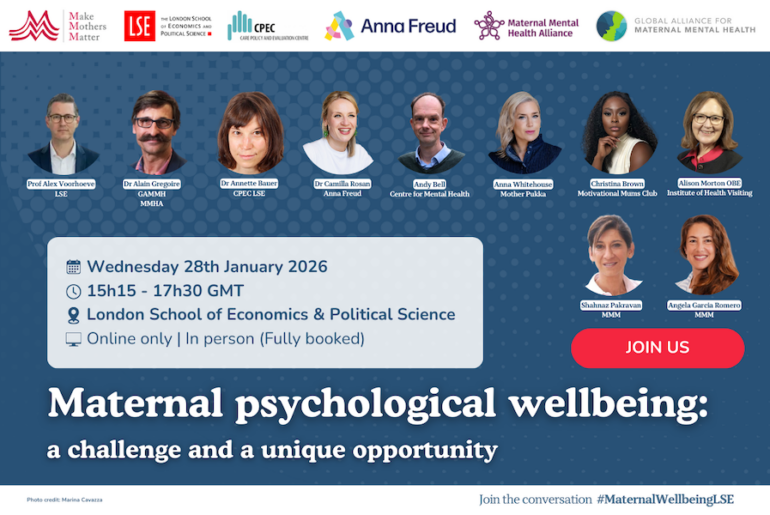
Wednesday 28 January 2026 | 15:15 – 17:30 GMT London School of Economics & Political Science (LSE) – Live broadcast #MaternalWellbeingLSE Maternal mental health is one of the most pressing