Our submission frames climate change not merely as an environmental crisis, but as a profound human rights emergency that disproportionately affects women, particularly during pregnancy and motherhood.
Climate finance ignores motherhood and unpaid care work
Extreme heat, pollution, food insecurity, and displacement increase the risks of maternal mortality, preterm birth, and mental health disorders such as depression and anxiety. Yet these issues remain largely absent from current climate financing mechanisms.
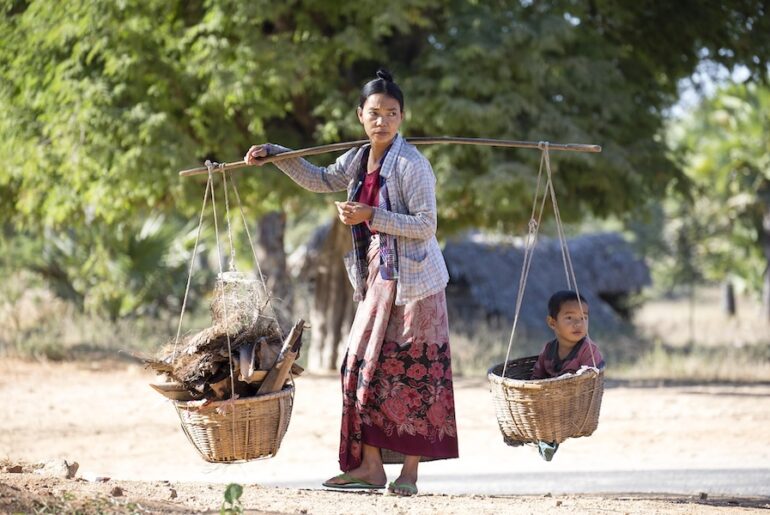
Similarly, mothers and unpaid caregivers constitute the “invisible frontline” of climate response, securing water, food, and care for vulnerable family members. However, the global climate finance architecture systematically ignores unpaid care work, focusing instead on mitigation, infrastructure, and technology.
These exclusions undermine fundamental rights to life, health, equality, and dignity. Only 0.5% of multilateral climate finance targets human health, despite 90% of countries including health priorities in their Nationally Determined Contributions.
We identify four structural barriers in current climate finance:
- the invisibility of care work in financing frameworks
- the structural exclusion of women-led organisations through complex accreditation requirements
- over-reliance on debt-based financing that crowds out public health spending
- the absence of metrics tracking care-related impacts
Yet, promising models of care-centred climate finance already exist, such as the Climate & Care Initiative, which provides small grants (up to US$ 50,000) to women-led grassroots organisations, and feminist funds like Mama Cash which support Indigenous women and community organisers. These examples demonstrate that locally led, grant-based funding can effectively address the intersection of climate adaptation and care responsibilities.
Our call for care-centred climate financing
To address these gaps, MMM proposes six principles for a care-centred climate finance system: recognising care as essential infrastructure; advancing gender equality and care justice; enabling direct access for grassroots organisations; prioritising non-debt financing; embedding human rights accountability; and implementing meaningful monitoring with disaggregated data.
MMM’s recommendations for States and climate finance actors:
- Integrate care into global climate finance priorities
- Make care and health visible in funding decisions
- Embed health – in particular, maternal, newborn and mental health – in adaptation planning and response frameworks
- Prioritise grant-based finance instead of loans for the health and care sectors
- Enable locally led action through small grants for caregiver-led initiatives
- Lower barriers to accessing climate finance
- Strengthen data collection and accountability
- Ensure the meaningful participation of mothers in decision-making
Investing in mothers and care systems is not charity but effective climate adaptation and human rights protection. We urge the UN and Member States to move beyond “green” finance, and place care, health, and human dignity at the centre of climate finance architecture.
 Read MMM’s full submission to the call for input
 Share
Share Share
Share Print
Print Email
Email