Labour protection must take unpaid care into account
09.06.23
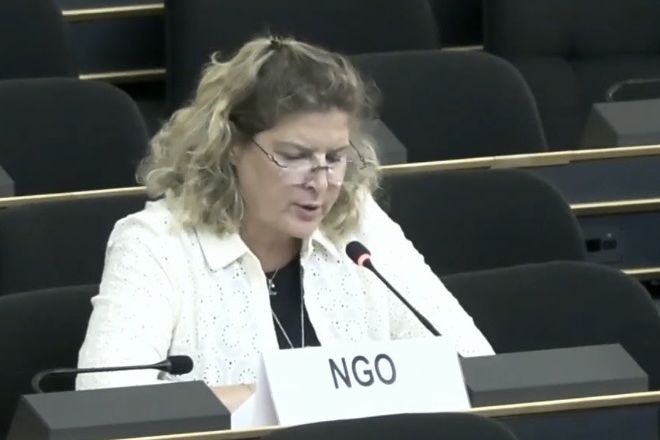
UN Geneva - Participating in the discussions on Labour protection at the International Labour Conference, MMM stressed that unpaid care work is indeed work, which should be everyone's responsibility. Labour Protection must therefore take a holistic approach to work, considering both paid and unpaid work as intertwined, to ensure that unpaid caregivers, in particular mothers, are adequately supported in their different roles, and not penalized by their care responsibilities.
The following is the full text of our statement.
Raising and educating a child, caring for an older person or a dependent relative, running a household – this IS all work, even if unpaid, a fact which was acknowledged in 2013 by the International Conference on Labour Statisticians .
Yet a decade on, this work remains unconsidered in Labour Protection discussions.
Globally more than 3/4 of this invaluable work is done by women, an inequitable distribution which remains a major obstacle to their labour force participation, and a cause of multiple discriminations, especially for mothers.
Still, the Covid-19 crisis shed light on how essential and foundational this work is for the wellbeing of all, and for the functioning and future of our society and economy. Unpaid care work therefore deserves recognition, protection and support. It must also be considered as a collective responsibility, with its costs more equitably shared between men and women and across society.
In fact, Labour Protection should also be about governments and employers taking their share of responsibilities, by providing adequate support for workers with care duties – in particular supporting men taking their share of unpaid care work. This is all the more important in a context of declining fertility rates and population ageing, which will only increase care needs.
We at MMM are therefore calling for a redefinition of labour as a holistic concept, where both paid and unpaid work is combined and intertwined; and a reassessment of labour protection to cover unpaid care labour.

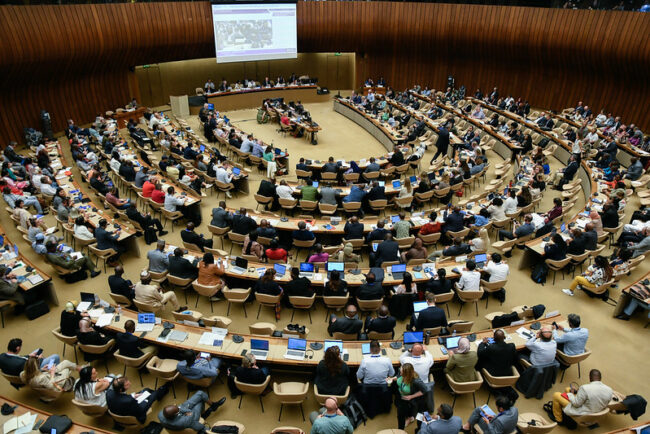
This statement was delivered at the first sitting of the Recurrent Discussion Committee on Labour Protection, as part of the 111th International Labour Conference, the annual gathering of the International Labour Organisation (ILO).
 Share
Share Share
Share Print
Print Email
Email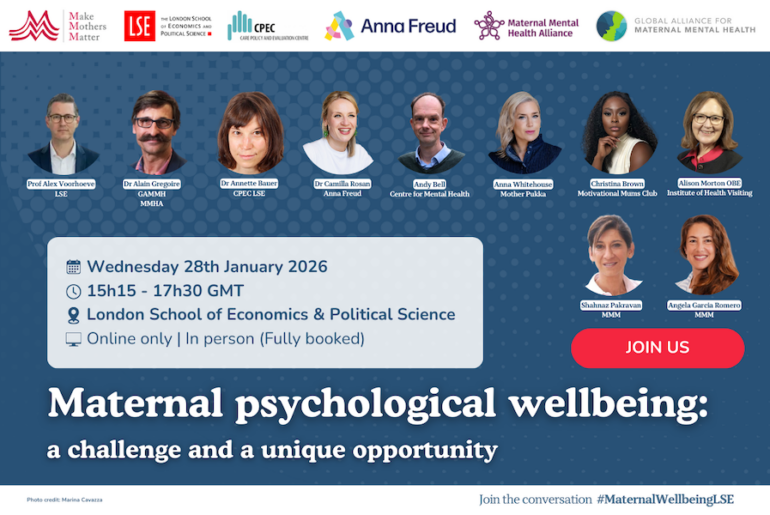
Maternal Psychological Wellbeing: A Challenge and a Unique Opportunity
13.01.26
Wednesday 28 January 2026 | 15:15 – 17:30 GMT London School of Economics & Political Science (LSE) – Live broadcast #MaternalWellbeingLSE Maternal mental health is one of the most pressing

Climate Change: A Maternal Physical and Mental Health Emergency
13.11.25
In the lead-up to the UN climate change conference in Belem, Brazil (COP30), MMM was delighted to collaborate with Dr. Saravanan Thangarajan, a Visiting Scientist & Faculty member at Harvard
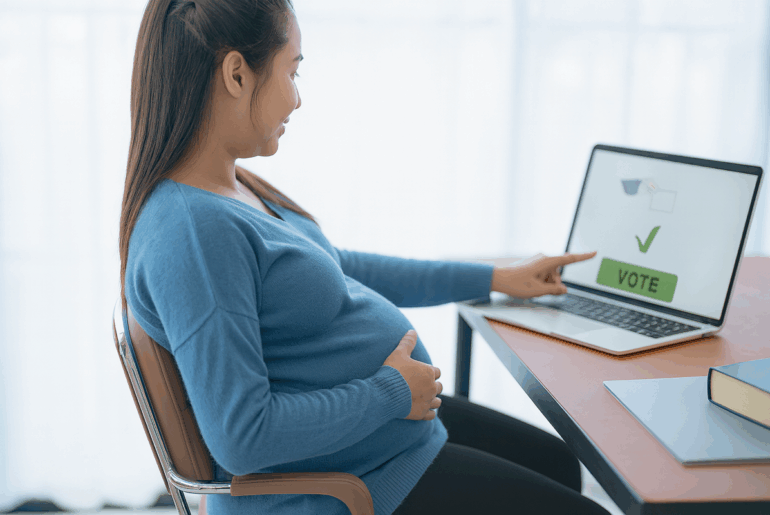
Democracy on Hold: The Hidden Penalty for Parliamentarians Who Become Mothers
27.11.25
The European Parliament adopted a legislative resolution on the amendment of the European Electoral act, allowing Members to vote in plenary by proxy voting during pregnancy and after giving birth.